The End
——A notebook whose owner wrote “The End” himself, and how it crossed 5,000 km to come home
There is a notebook. Its last page ends like this: “And so the days of the battlefield pass, one by one. The End.”
The End.
The man who wrote it recorded that himself. Three months later, he was killed. So why does this notebook survive here now — and how did it get home?
Maruta Toshimichi's notebook is still in a box across the Pacific. In the same “return of a diary,” Tamura's notebook — came home. Read these two side by side, and the weight of a single sheet of paper coming home begins to show.
① One notebook — not a record of battle, but rain, the moon, and songs
Tamura Yoshikazu was born to a farming family in Oyama, Tochigi. Called up for a second time, he headed to the front at twenty-six. Most of the notebook he left is filled not with fighting, but with rain, his hometown, and songs composed on moonlit nights.
The Japanese army allowed its soldiers to keep diaries. So what survives is not glorious deeds, but the honest five senses of one man standing on a southern island.
And this man composed songs. Tanka, in a battlefield notebook. That is what most sets this diary apart from other fragments.
Songs, on a battlefield. …I love this person. To be in a terrible place, and still look up at the moon and choose words. Such a person existed.
② The diary's words — only the verified originals
(from the original text, whose copyright term has expired)
Though I think this may be my last sight of this life, how strangely calm my heart is.
— At eleven at night, the train passes his hometown station without stopping.
I do not fear the enemy's bullets, but the daily rain I resent.
— Hardtack goes white with mold in the damp; of the bananas he dreamed of, he gets only two.
How strange that a change of place makes even the north dear — ironic, and I laugh to myself, alone.
— Come south of the equator, the direction toward home has turned northward.
The planes' and our own tracer fire glow — beautiful, like great fireworks.
On the battlefield the autumn grasses bend and hush; / a night bird cries, and the moonlight is white.
The waves rise, the sea unchanging as ever — / yet knowing it swallowed my friend, I hate it.
— The day before, on the beach, a friend had said “Give my regards to the squad”; his ship sank in the bay before his eyes.
Beyond this sea is my dear homeland. My beloved friends are there. / The relief sentry has come. … And so the days of the battlefield pass, one by one. The End.
The notebook ends here.
③ Discovery and return — 5,000 kilometers, and sixty years
In March 1944, as the Allied counteroffensive swallowed the island's coast from the east, Tamura was killed at Biliau. The notebook was left on the battlefield.
It was picked up by the Australian army. The notebook crossed the sea and slept for sixty years in the war memorial at Canberra — as one Japanese notebook whose owner's name was unknown.
Sixty years later, a researcher translated it and traced its owner. Tamura Yoshikazu. A man of Oyama, Tochigi. In December 2003, the notebook came home.
What ihin henkan (遺品返還) means — a notebook takes sixty years to come home →
④ The notebook's journey
Oyama (Tochigi) → Ujina / embarkation → Wewak (New Guinea) → Biliau (killed) → Canberra (Australian War Memorial, sixty years) → Oyama (home, 2003)
Maruta's map has no line for the road home. Tamura's map has that line — the one notebook that crossed 5,000 km and sixty years to come home.
⑤ Background: the front he was sent to — New Guinea
Tamura belonged to the 239th Infantry Regiment (“Eastern Unit 36”), raised in Utsunomiya. In January 1943, on his second call-up, he joined this regiment and headed south.
1943: two years into the war, the year Japan's advance halted. Troops were pulling back from Guadalcanal to the south, and an over-stretched line was turning to the defensive. One of those front lines was New Guinea — 5,000 km from Japan, a vast island with thin supply. Tamura standing in the rain on an airfield-building coast was the very beginning of this “era turned to defense.”
Read the 239th Infantry Regiment — the “other paper” that sent him →
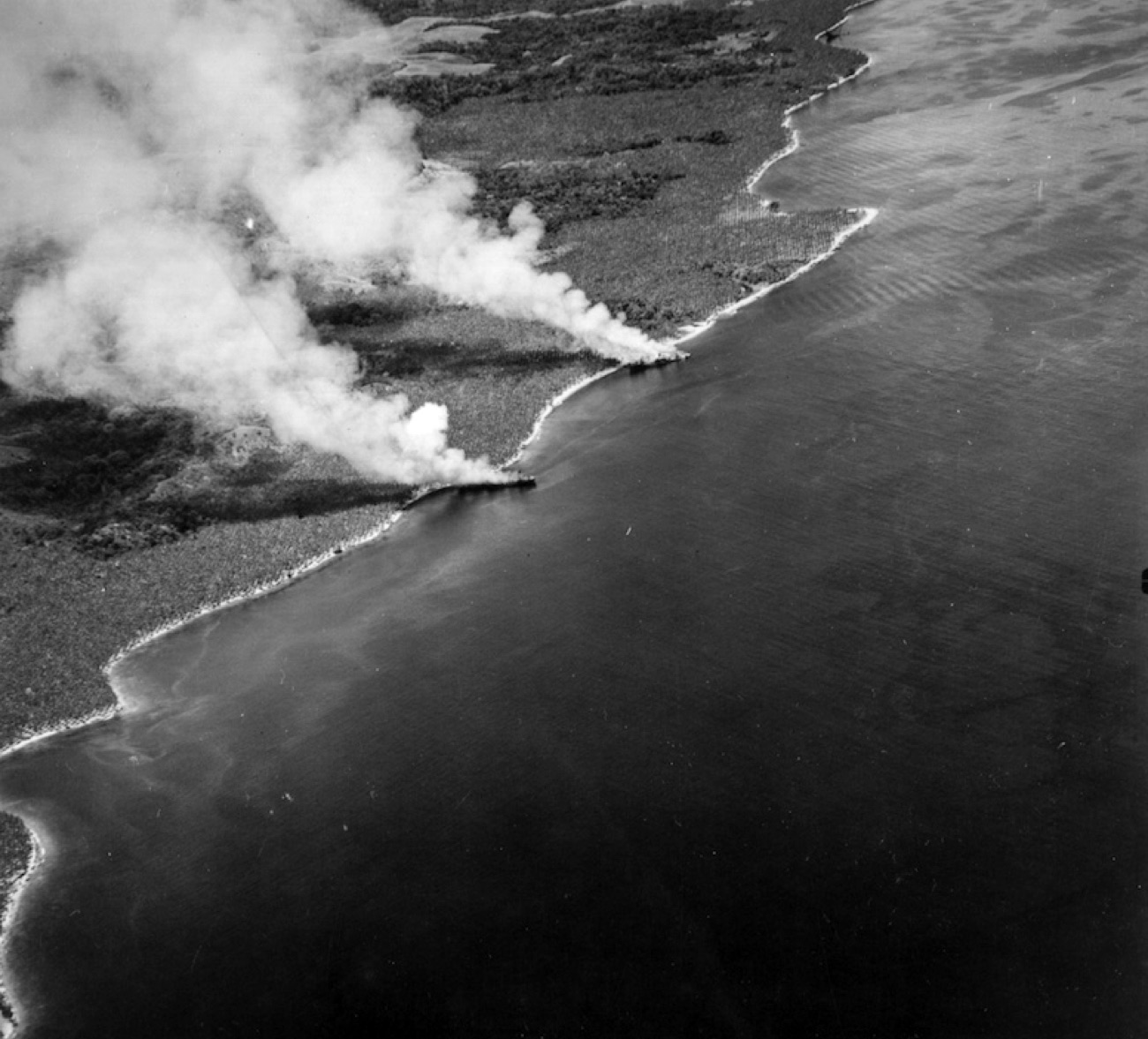
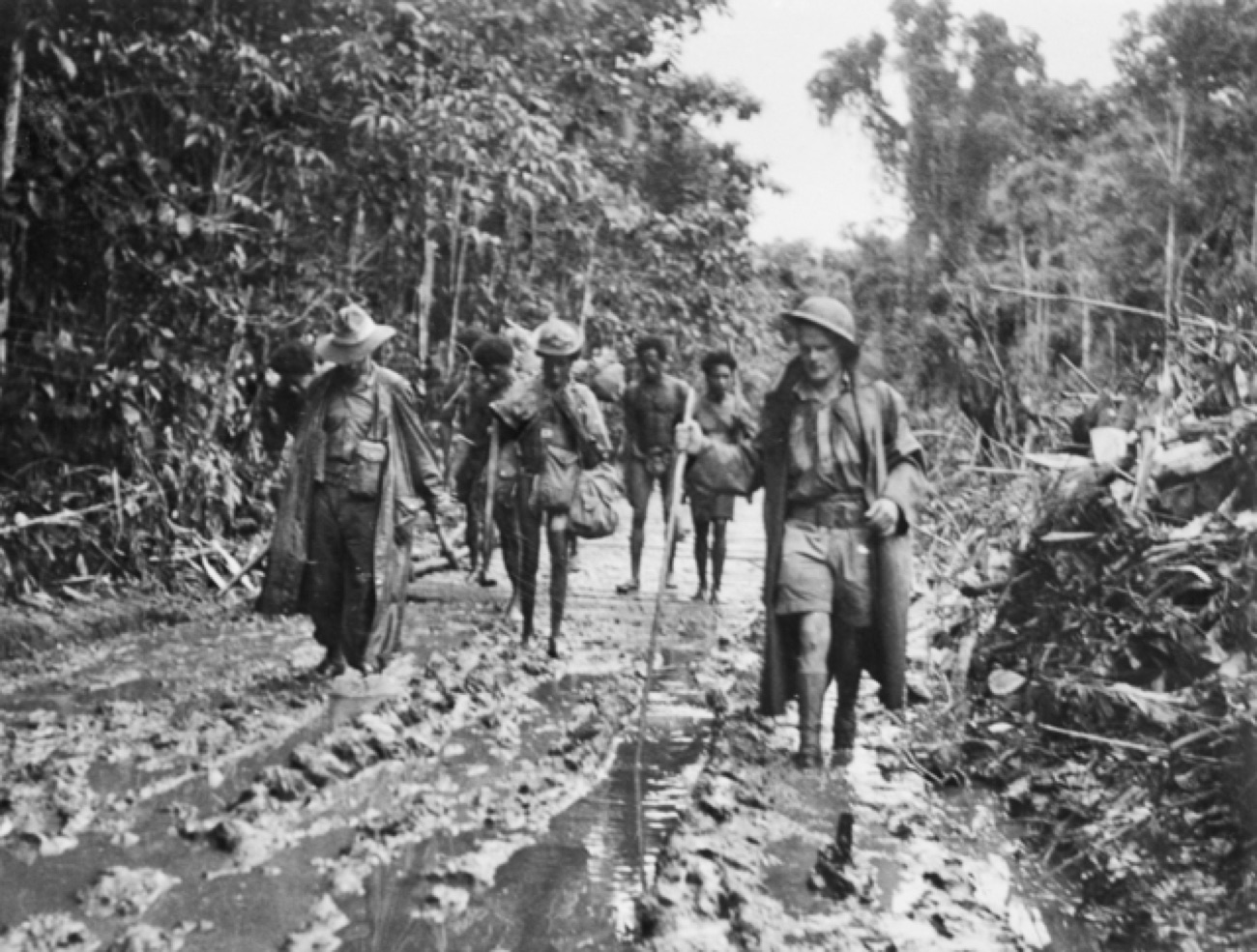
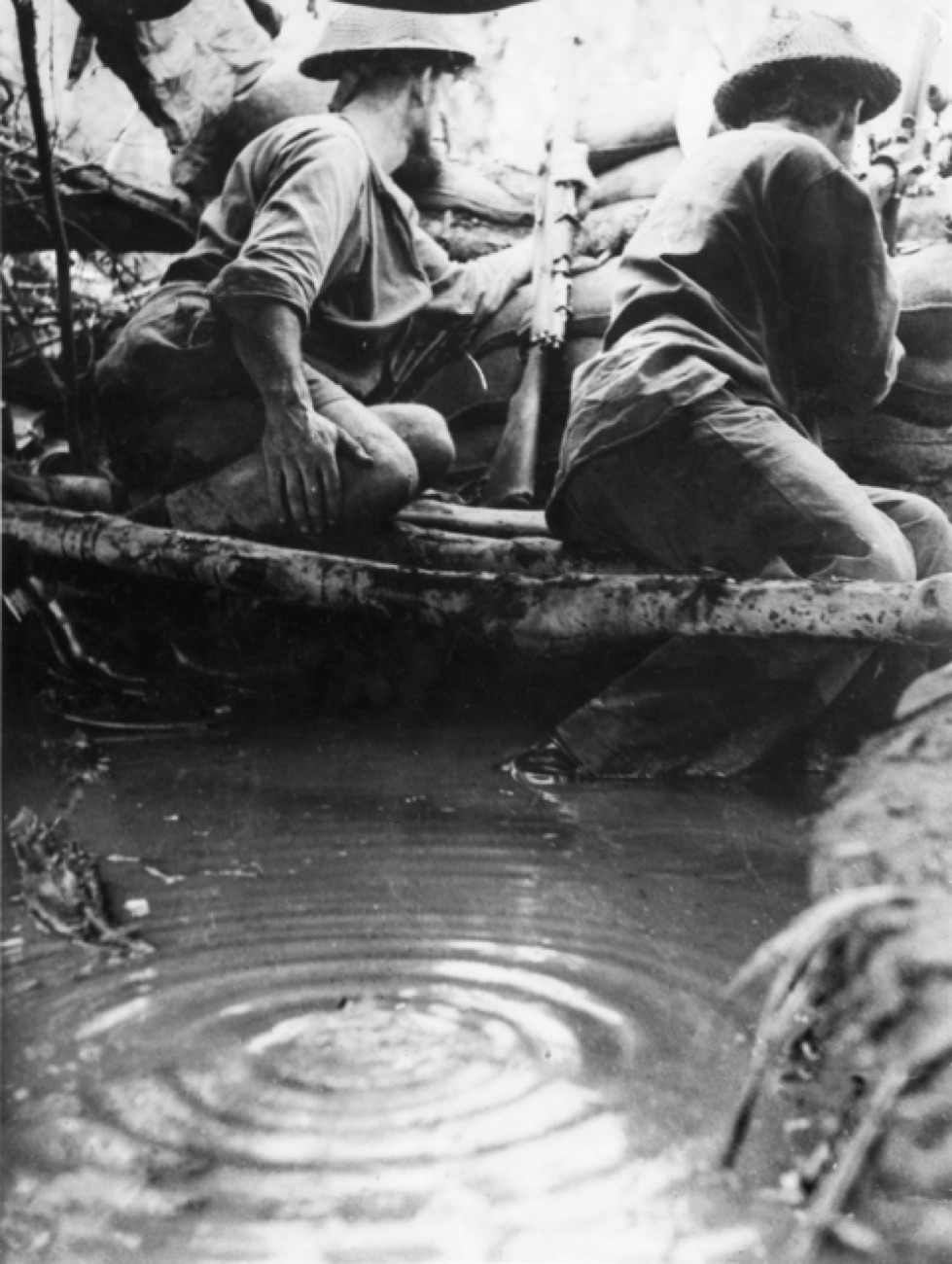
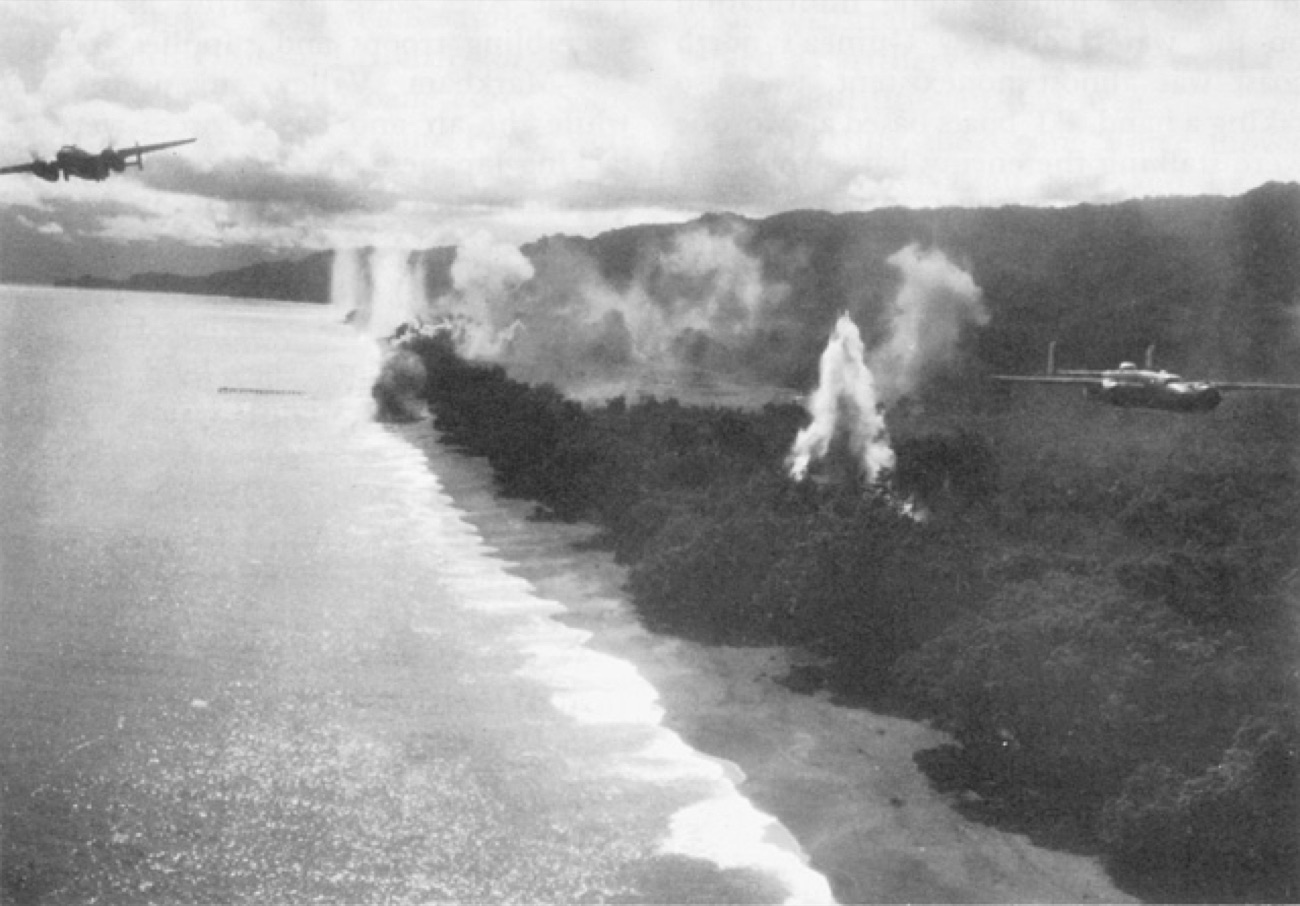
⑥ In photographs
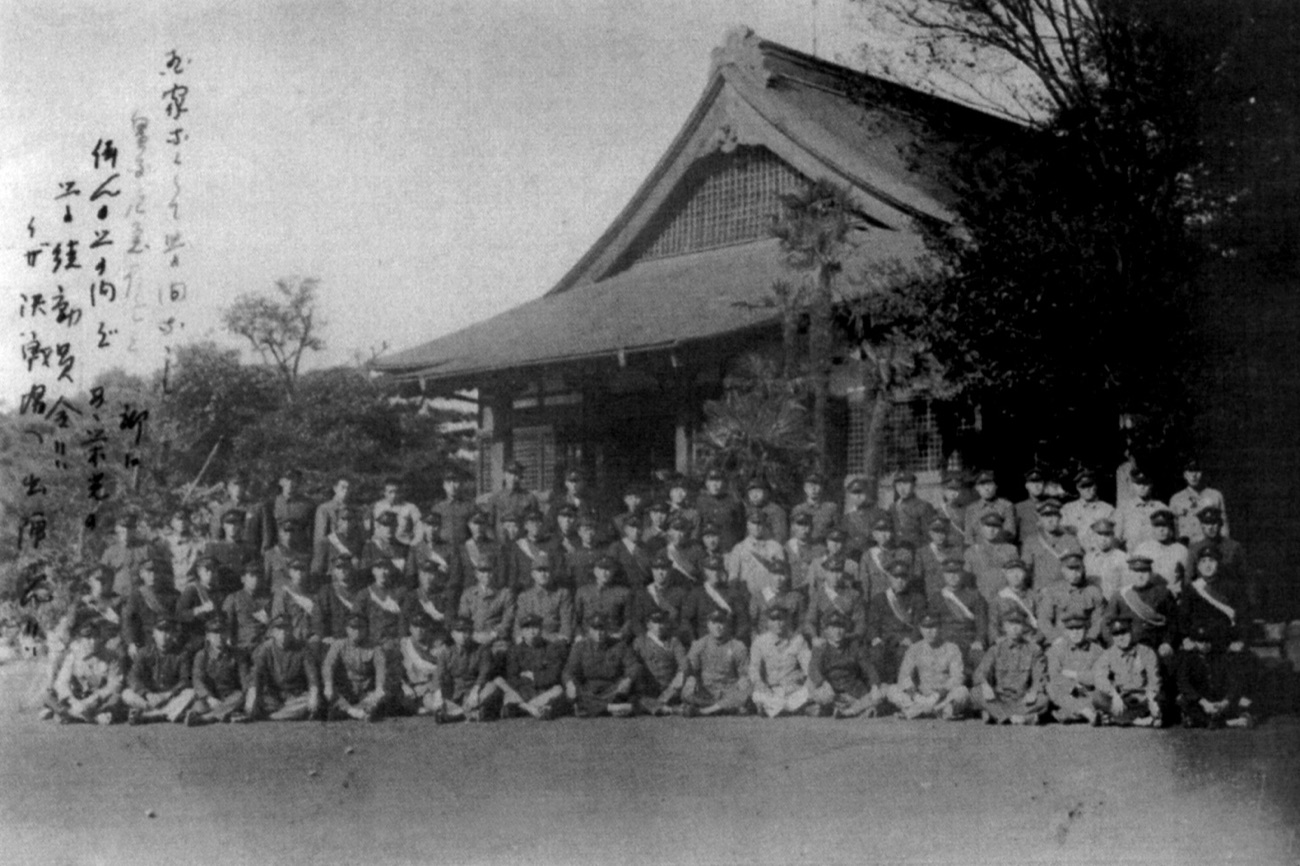
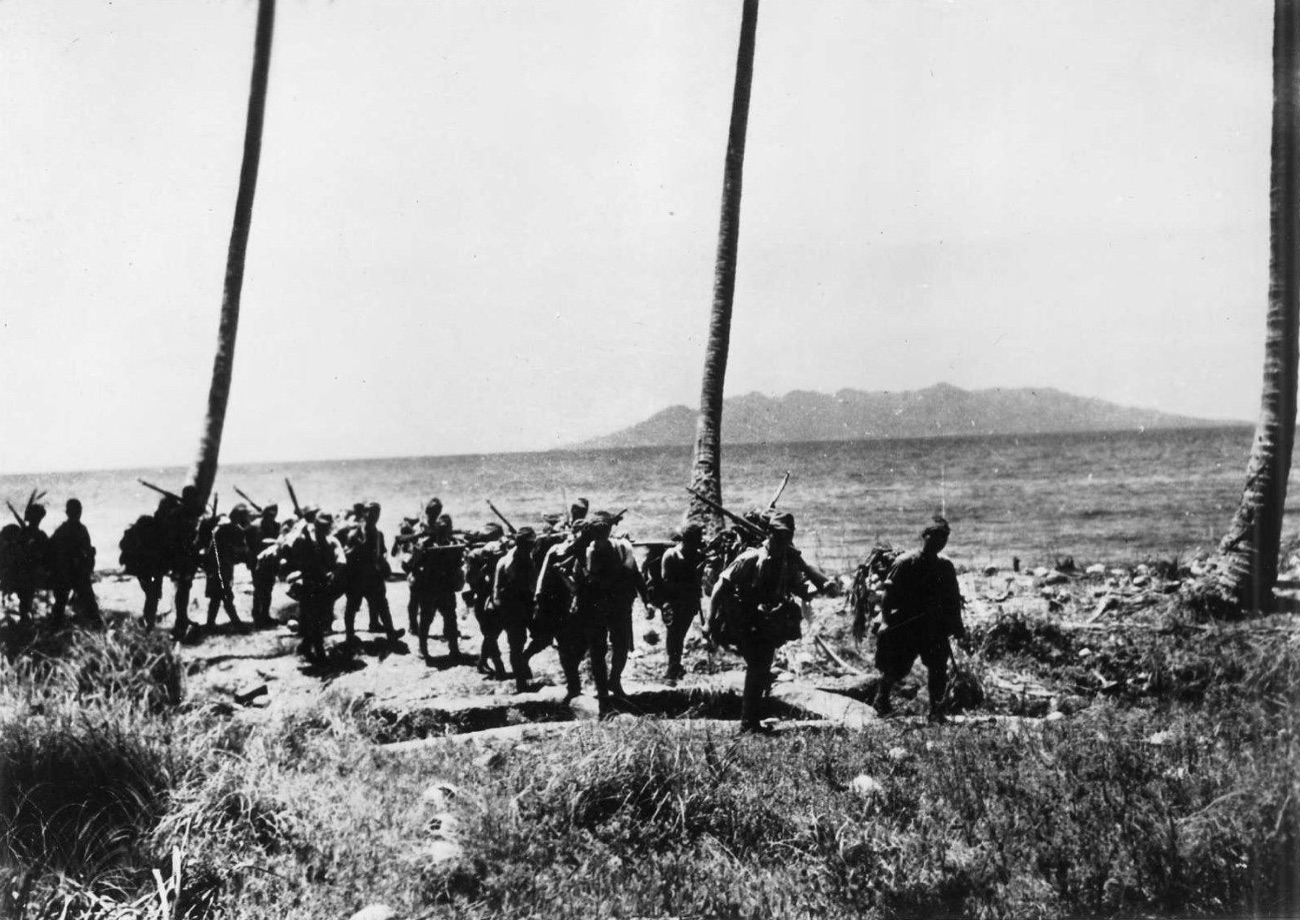
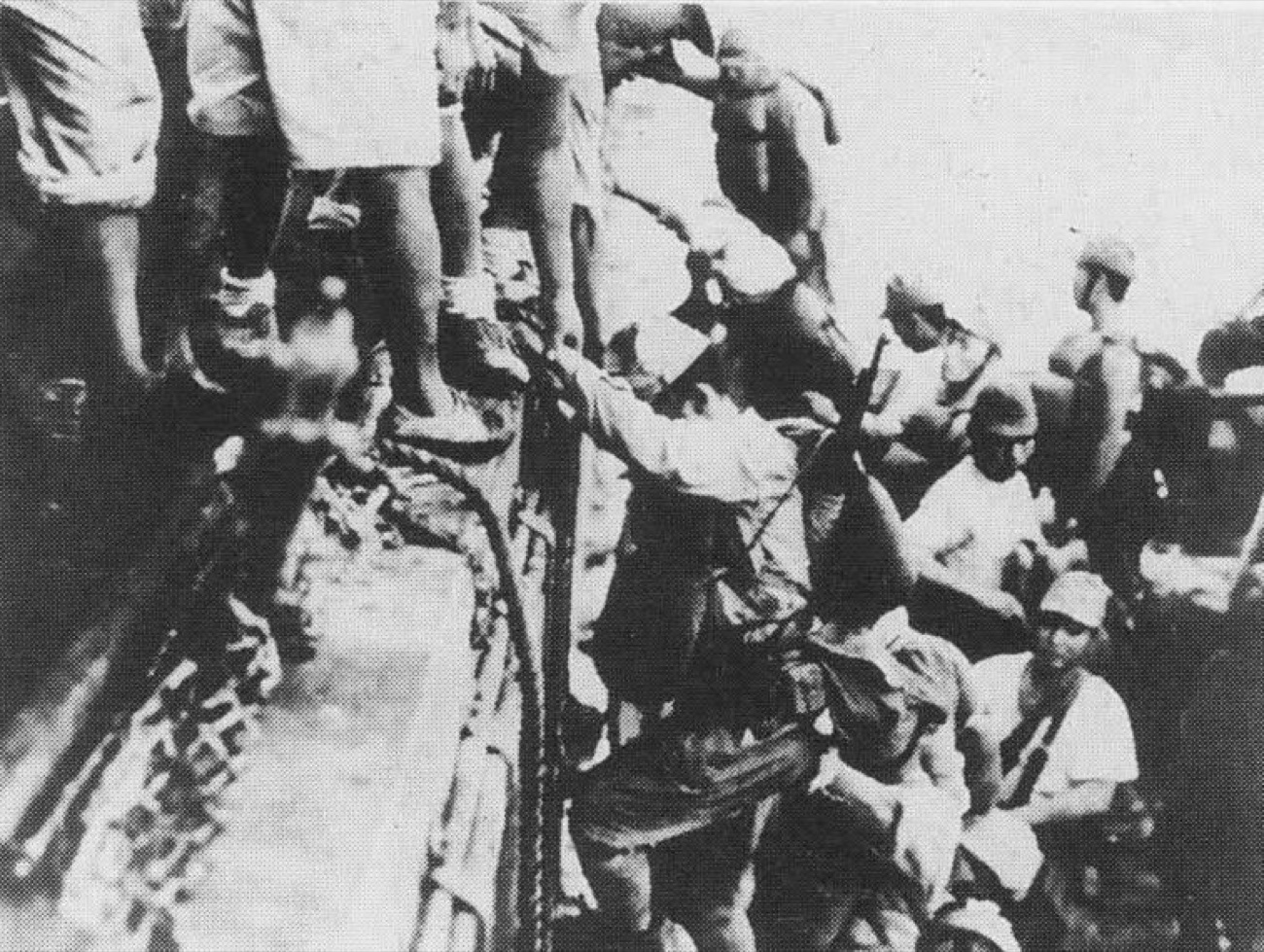
All are public-domain materials. None show Tamura himself or his family. They show the southern front his notebook passed through.
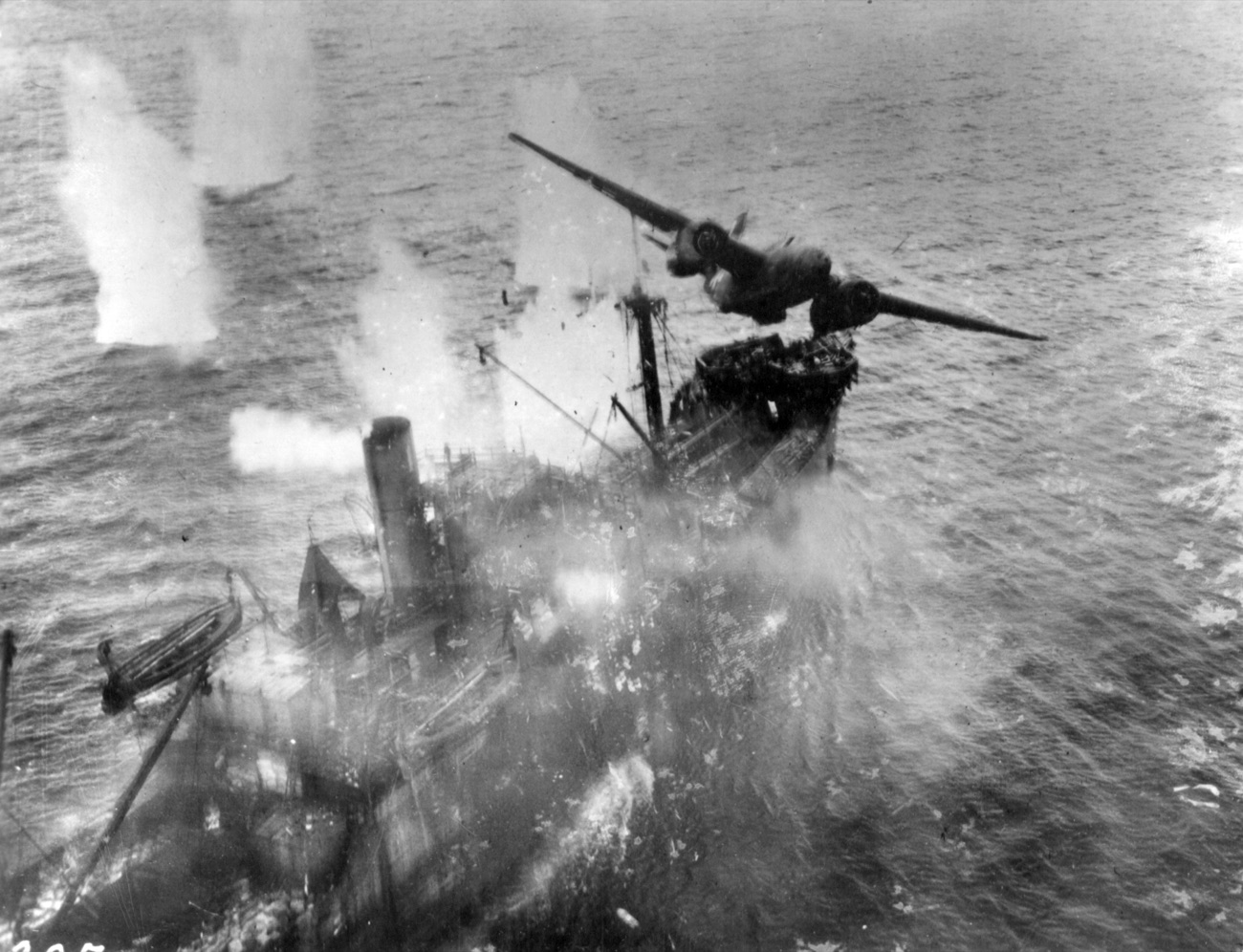
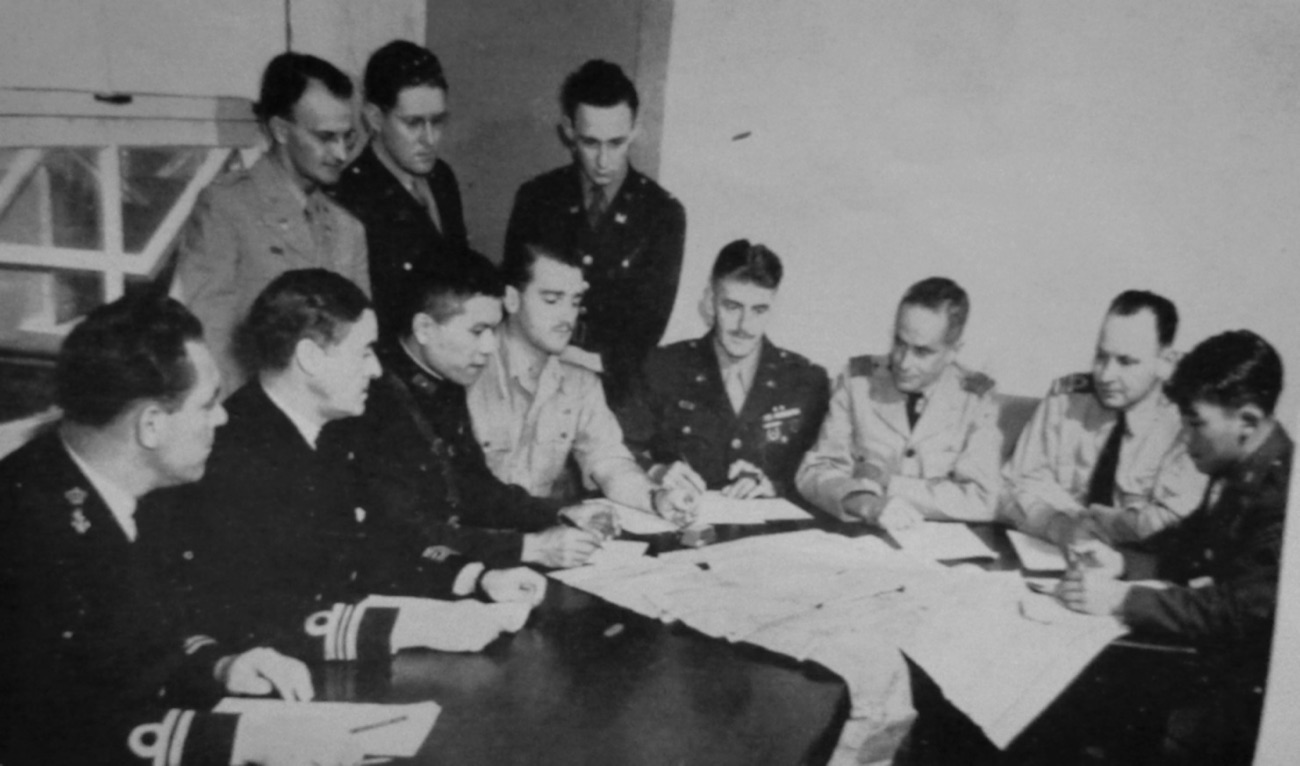
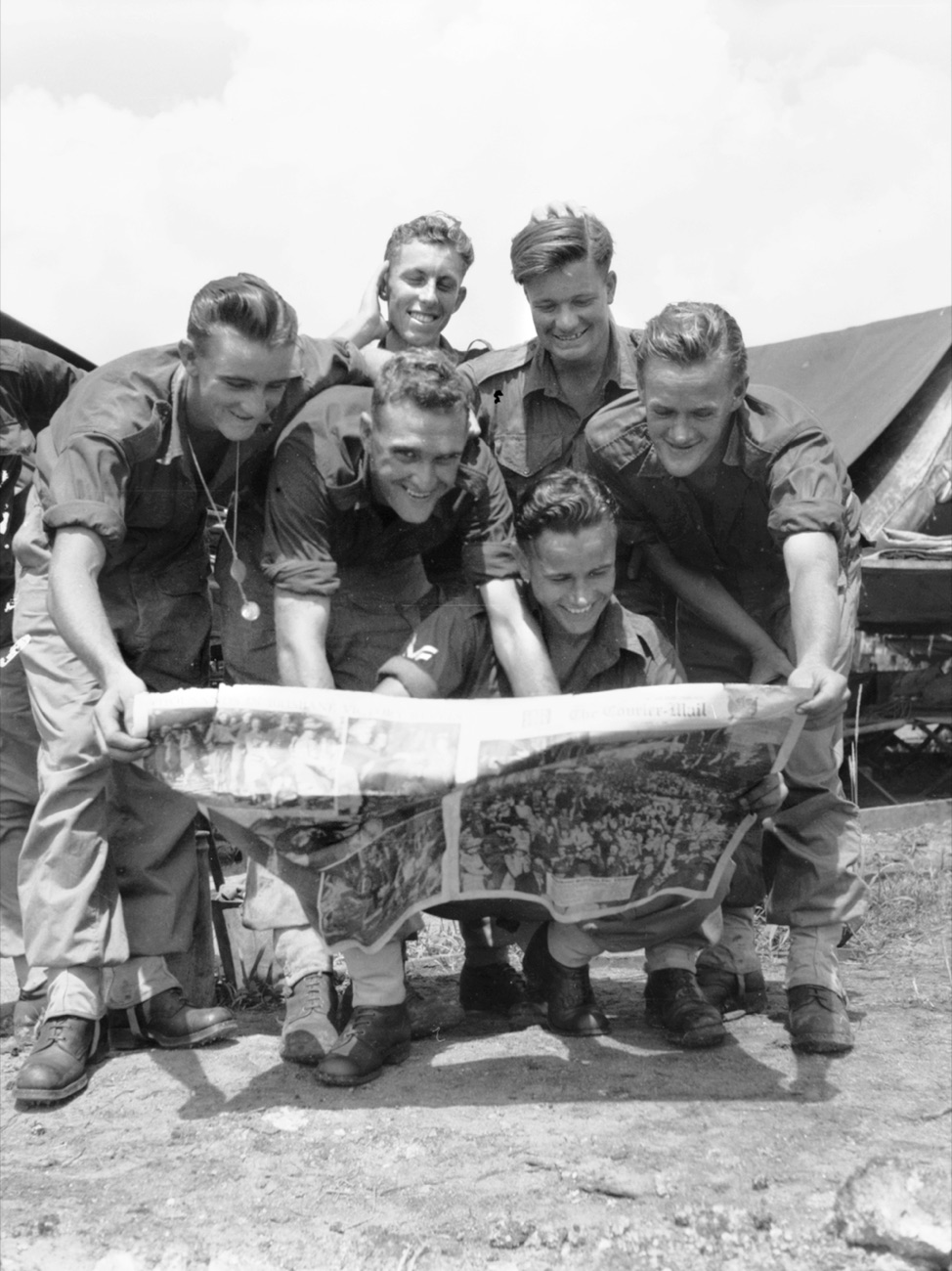
⑦ In more detail — differing accounts, and what could not be verified
There is not much in history one can call absolutely certain. So this page does not only choose “what is certain”: where things are uncertain, we say so, and include them anyway. A single account, sources in conflict, or nothing to back it at all — each time, we make that clear.
🟢 Confirmedbacked by primary/secondary sources 🟡 Disputedsources or scholars differ ⚪️ Unverifiedplausible, but without evidence
1. How a notebook with no name written in it got its name back 🟢 Confirmed
This notebook, in fact, had the writer's name written nowhere — not on the cover, not inside. That is why it was long called “the diary of a nameless Japanese soldier.”
So why can we now call him “Tamura Yoshikazu”? Not because it was written down, but because it was investigated and found. The Australian researcher Tamura Keiko (the shared surname is coincidence) translated the notebook, picked up clues from its contents, and traced the bereaved family in Japan. The name returned from outside the notebook, after the fact.
Here is the fork in the trilogy. Maruta's notebook had a name written in it (yet the object itself still cannot come home). The other, the Makin diary, remains with its name unknown. And Tamura — though no name was written — came home, name and notebook both, because someone investigated. Even “a name returning” has several roads.
Source: AJRP (Australia–Japan Research Project), Tamura Keiko, “The War Experience of One Japanese Soldier,” bilingual essay (AWM holding PR02035); recon (2026) confirmed “owner identification during the return process = no author name recorded in the diary.” ⚪️ distinction = not a record of the man naming himself (identification by research).
2. The place he fell, and the place he wrote, are different 🟢 Confirmed
Most of Tamura's notebook was written around Wewak in New Guinea. But the place of death in the official notice is “March 1944, killed at Biliau, New Guinea.” Wewak is where he wrote; Biliau (toward Madang) is where he fell.
They are separate places, with a road of retreat between them, pushed back by the Allied counteroffensive. So the map's pins become three: Wewak (wrote), Biliau (fell), and Oyama (home).
The same structure as Maruta. The notebook's end is where the diary was written, not the place life ended. What we can trace is up to where he wrote.
Source: official death notice “March 1944, killed at Biliau, New Guinea” (AJRP Japanese-edition epilogue, family testimony). Wewak = place of writing / Biliau = place of death = recon Tier check.
3. His birthplace differs across sources 🟡 Disputed
Where was Tamura from? Here too is a small discrepancy. Oyama, Tochigi is where his family home stood and his family lived. Meanwhile, the AJRP English-edition essay records “from Utsunomiya.”
This is likely a discrepancy where the place of call-up (Utsunomiya) and birthplace/family home (Oyama) were rounded into one in translation. On 5 January 1943, Tamura enlisted in Utsunomiya's 239th Infantry Regiment (“Eastern Unit 36”). Looking only at the English sources, he appears “a man of Utsunomiya,” but the home he wanted to return to was in Oyama.
Source: AJRP English essay (Utsunomiya notation) / recon Tier check (Oyama = family home, Utsunomiya = call-up). 239th Infantry Regiment / Eastern Unit 36 confirmed. A gap between the Australian-side English (2000s) and the Japanese-side family record — set out as a notation discrepancy.
4. The reading of his name is settled — a contrast with Maruta 🟢 Confirmed
Where Maruta's given name (年道) could be read by no one, Tamura's name is settled as “Yoshikazu.” The AJRP English edition records “Yoshikazu Tamura,” matching the family's confirmation.
Even in the same “picked-up diary,” the certainty of a name differs this much. So this channel calls Maruta by surname alone, and Tamura by full name. The difference is not carelessness, but a difference in how much could be verified.
Source: AJRP English edition (Yoshikazu Tamura) / family confirmation (Tamura Keiko essay). Contrast with Maruta's ⚪️ (reading unknown).
5. Over a hundred tanka in a battlefield notebook 🟢 Confirmed
The one thing that most sets this diary apart from other fragments: its songs.
Tamura would write a few lines of prose, then string together four or five tanka after them. Across the whole notebook, more than a hundred. Rain, his hometown, moonlit nights. A twenty-six-year-old farmer's second son composed this many songs on a New Guinea battlefield and left them in his notebook. That he had once been demobilized after service in China (no actual combat) and gone to the front on a second call-up; that he was unmarried; that his mother's death anniversary was 6 February — such details of a life rise between the songs.
On the last page of the notebook, he wrote, himself, “The End.” Three months later, he was killed.
Songs, on a battlefield — over a hundred of them. Of all these notebooks, his is the one I most think of as a “book.”
Source: AJRP transcription (143 pages total, ~34,000 characters, the prose→tanka pattern) recovered and confirmed (recon 2026). Life basics (born 1917, unmarried, mother's death anniversary 6 Feb, second call-up after China service) = Tamura Keiko essay.
6. The notebook's 5,000 km and sixty years — who brought it home 🟢 Confirmed
Tamura's notebook was left on the battlefield, at some point crossed to Australia, and was held at the War Memorial (AWM). Holding number PR02035. For a long time it was one nameless volume.
The one who translated it and traced its owner was, as above, Tamura Keiko. On 10 December 2003, a return ceremony was held at the Canberra war memorial, and the notebook passed from the director, via the Japanese ambassador to Australia, to the bereaved family. That same summer, NHK covered it. The notebook traveled 5,000 km and sixty years to come home to Oyama. It is one of the few for which a homeward line can be drawn on the map.
Source: AJRP / AWM holding record PR02035; the 10 December 2003 return ceremony (Tamura Keiko essay, press). NHK “The Last Words” (broadcast 2003). The Australian side (AWM, researcher) and the Japanese side (family, press) agree.
Sources (whole page)
- AJRP (Australia–Japan Research Project / AWM holding PR02035): 143-page diary transcription; Tamura Keiko, “The War Experience of One Japanese Soldier,” bilingual essay
- Official death notice “March 1944, killed at Biliau, New Guinea” (AJRP Japanese-edition epilogue, family testimony)
- 239th Infantry Regiment (Eastern Unit 36, Utsunomiya call-up) = recon Tier check
- NDL private-edition bibliography (The Last Diary, GB554-H314) / 10 December 2003 AWM return ceremony, NHK coverage
This channel does all source selection, fact verification, and interpretation and final judgment of language by human hands. Parts of production (voice synthesis, image stylization, translation assistance) use AI. See our production principles.
⑧ Watch / to the next piece
We go looking for the next piece of paper. Subscribing, and a thumbs-up, are what make that possible.
Watch & subscribe on YouTube → The notebook not yet home (Maruta) →
The facts in this article rest on primary sources — the diary transcription confirmed by matching the AJRP original and furigana editions. The quoted diary and the photographs are all public domain.
Article text © 2026 Fragments of Japan ・ Corrections of factual error: contact@fragmentsjapan.com