We're Still Alive Today
— a diary without a name, surviving only in the enemy's translation
There is a diary. But this fragment differs from every other fragment here in two decisive ways.
We do not know the name of the person who wrote it. And — the Japanese original, the notebook itself, no longer exists anywhere. What survives is a copy: the enemy's translation into English.
Tamura Yoshikazu's notebook had a name, and made it home. Maruta Toshimichi's notebook has a name, but has not yet returned. And this diary — because it has no name, it has no home to return to. Why did only the voice survive? That is what this page retraces.
① One diary — an observation log that turns into a record of staying alive
The person whose name we do not know, this page calls "the writer."
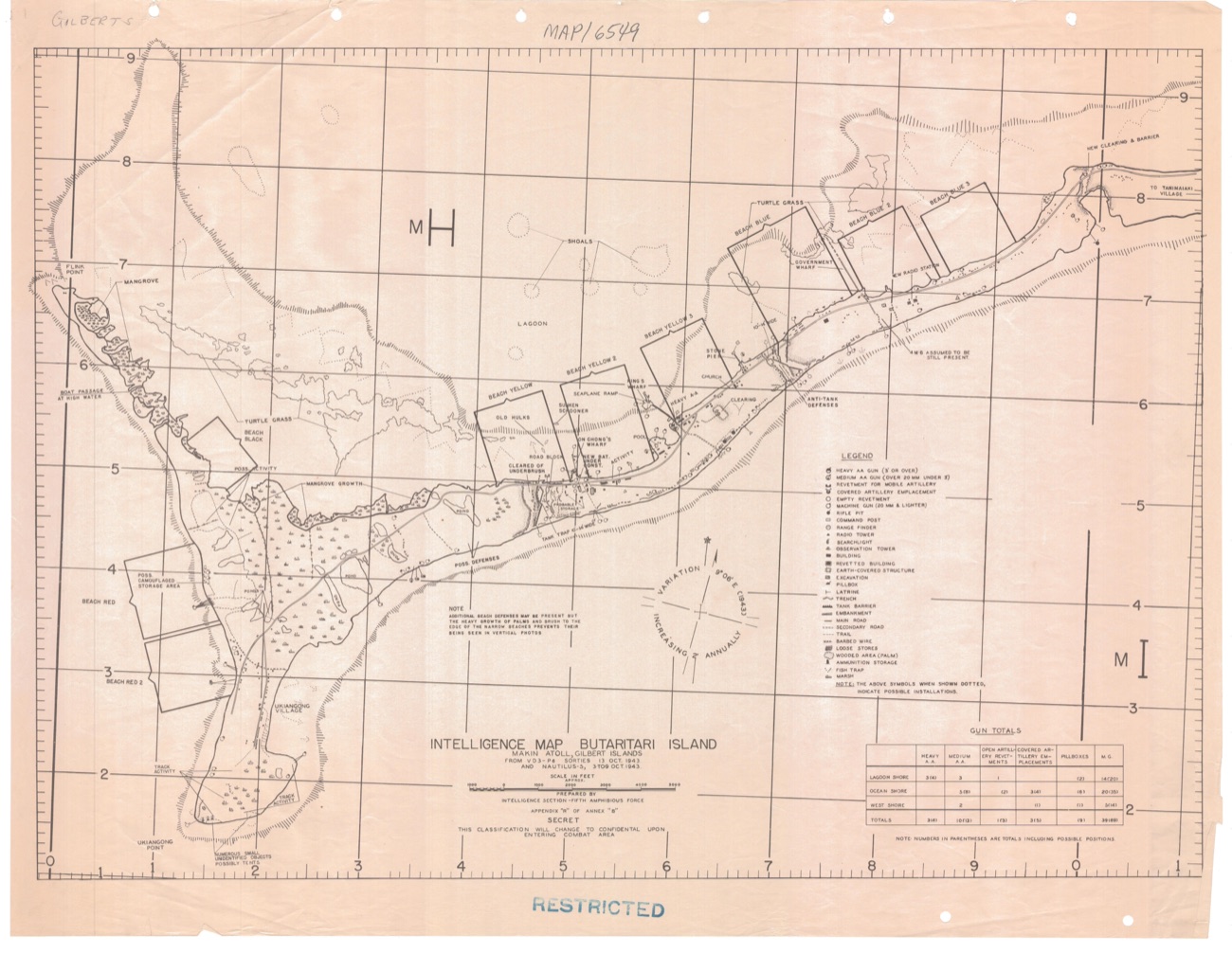
The writer was a meticulous man. The first half of the diary reads like an observation log: the number of enemy aircraft, bearings, times, reports of planes shot down — orderly sentences, line after line. November 1943, just north of the equator: Makin Atoll, a coral reef some three thousand kilometers from Pearl Harbor, a small stepping-stone in the Pacific where the Japanese navy kept a seaplane base.
But after the island fell to the Americans, the diary's meaning changes. It stops being a record of preparing to die, and becomes a record of trying to stay alive. That is where this diary's real story begins.

This time I am, so to speak — a copy of a copy. The true paper may no longer exist. Even so, the voice survived. Without a name.
② The diary's words — from the translation that survived
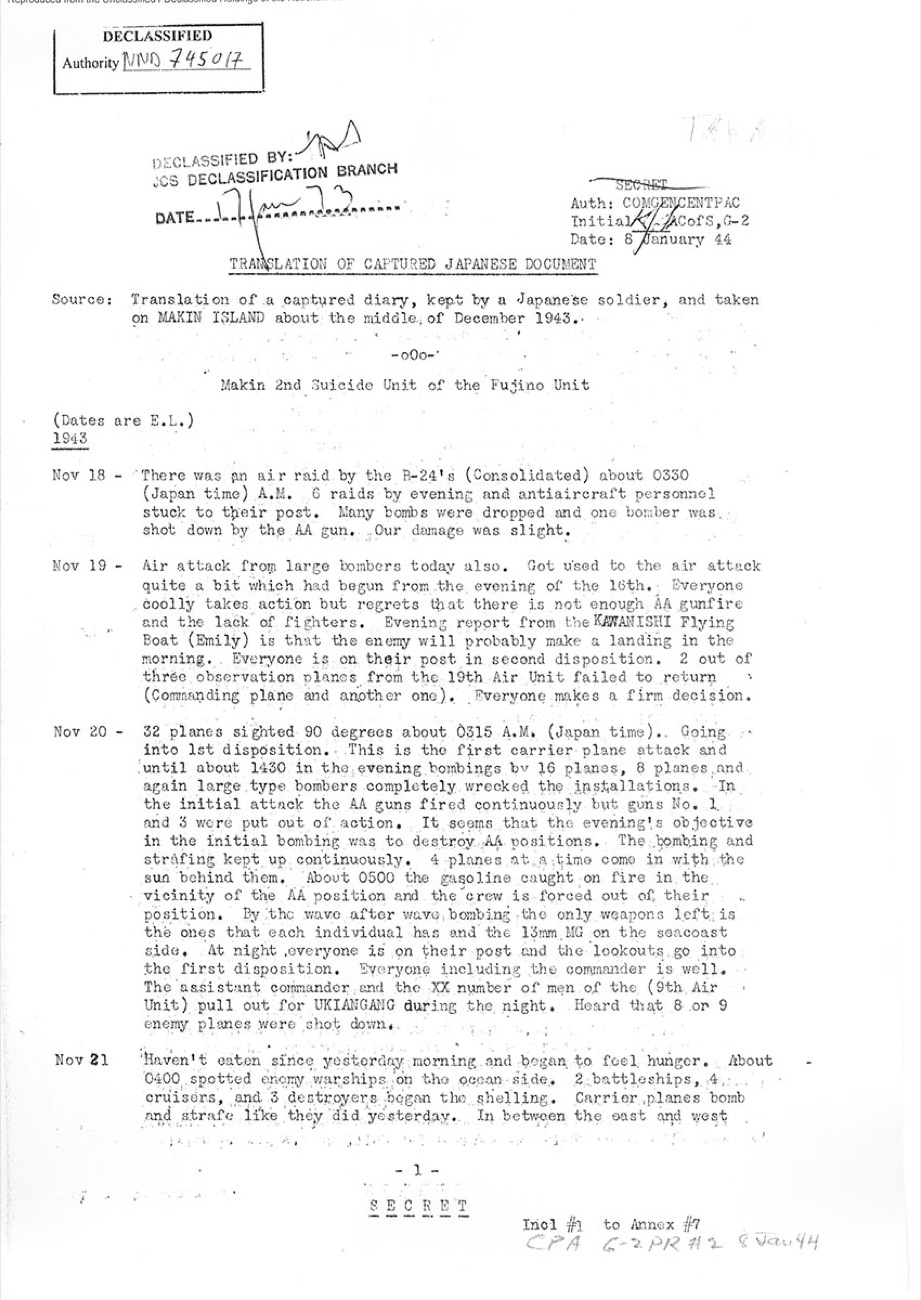
(The original notebook is gone. The diary survives only in the English translation made by U.S. military intelligence in 1944. Quotations below marked ◆ are verbatim from that surviving translation, as preserved in U.S. National Archives records. Three early entries, marked ※, are our English rendering of lines read from the document scans — see ⑦-1.)
Air raid by B-24s from about 0330. Six raids by evening. … One bomber shot down by the high-angle guns. Damage slight.
We have grown quite used to the air raids that have gone on since the night of the 16th. Everyone is acting calmly. … Everyone is resolved.
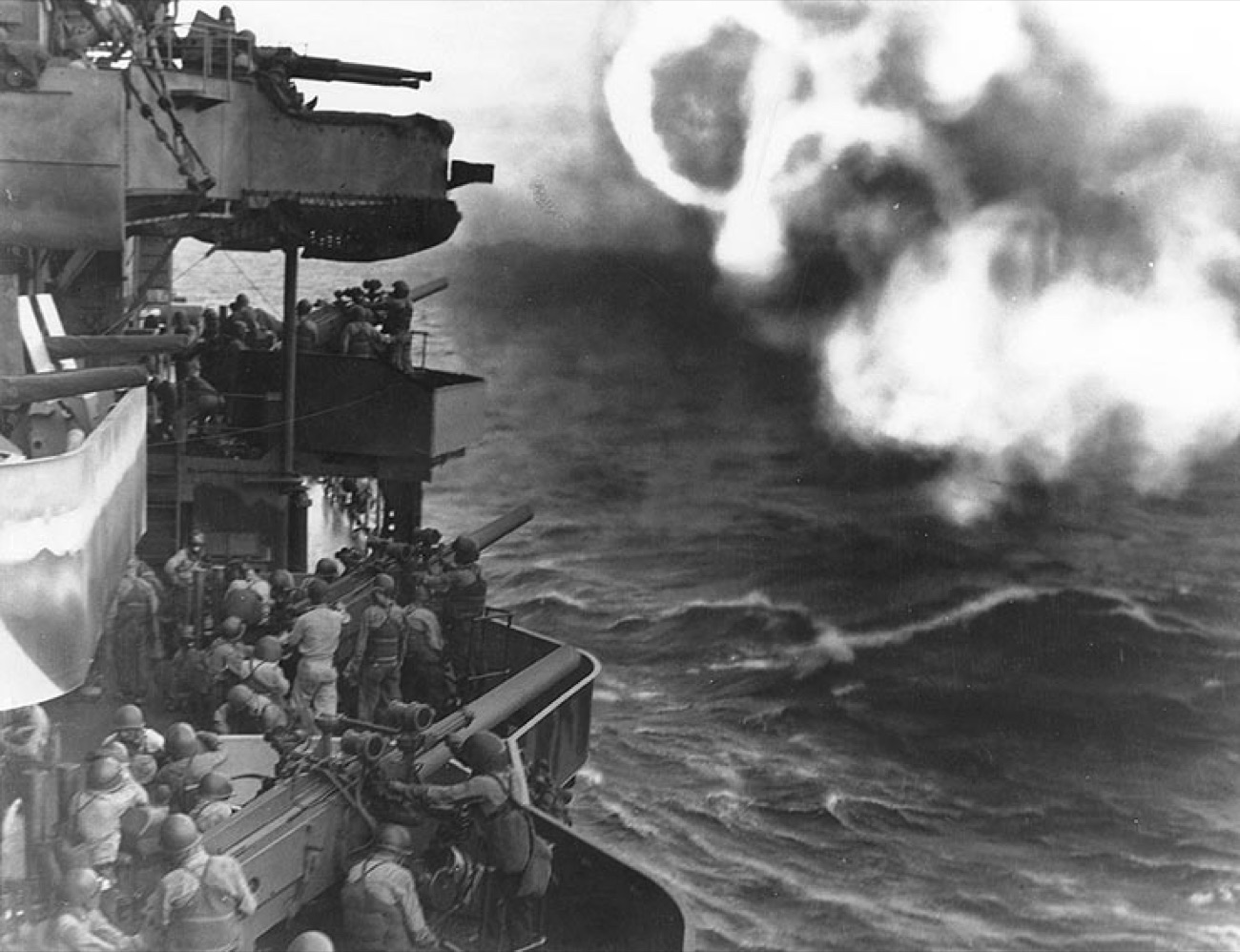
Nothing to eat since yesterday morning, and I am hungry. Around 0400, enemy warships on the ocean side — two battleships, four cruisers, three destroyers — opened their bombardment.
We're still alive today. We know that we are to die so therefore we are the second suicide unit and plan to fight to the beautiful finish.
Even though we are alive we figure we will only live about 2–3 days. All of us put the muzzle of the gun to our throats several times but however eventually we will die so why not just stick it out to the finish?
Paid respect to the place where the commander was killed. … Today we filled ourselves up for the first time on chocolate, beef, sugar, and bread which was left by the enemy.
For the first time we wash our face and hands with soap. Plan to go to Kuma [nearby island] in the night.
The diary breaks off here.
③ The island's four days
It began with the air raids of 18 November; then the carrier planes of the 20th, the naval bombardment of the 21st, and the landing — the battle was decided in four days. On 24 November, the American commander reported the island's capture complete. On the same day, at Tarawa, a hundred and seventy kilometers to the south, American forces were landing too. Makin was the northern half of that battlefield.
Through those four days, the writer went on counting, meticulously. The number of battleships. The number of raids. And — his hunger.
④ One record, three faces
By Japanese records, about six hundred ninety-three men were defending the island. Of these, only about two hundred forty were combat troops; the rest were construction crews building the airfield and base — many of them men from Korea.
What happened to those laborers? The records show different faces, depending on where they stand.
- The diary writes: "men from the labor battalion hastily commit suicide."
- Japan's official war history gives it a single line — "one hundred civilian employees and one sailor were taken prisoner; all the rest died to the last man."
- Korean scholarship records that many of them were unarmed conscripted workers mobilized from mainland Japan — and that, having been made to believe the propaganda that capture meant death, they could not surrender.
Of the roughly one hundred men taken prisoner, most were Korean laborers. Of the Japanese servicemen, exactly one — a sailor — was captured alive.
This page does not declare any one of these records "correct." It sets the three faces side by side. We do not want to pronounce history from one side only.
⑤ Toward life — twenty-one kilometers, a line not for going home
The island fell. But the writer was not captured. With his comrades, he had fled to the island's eastern end.
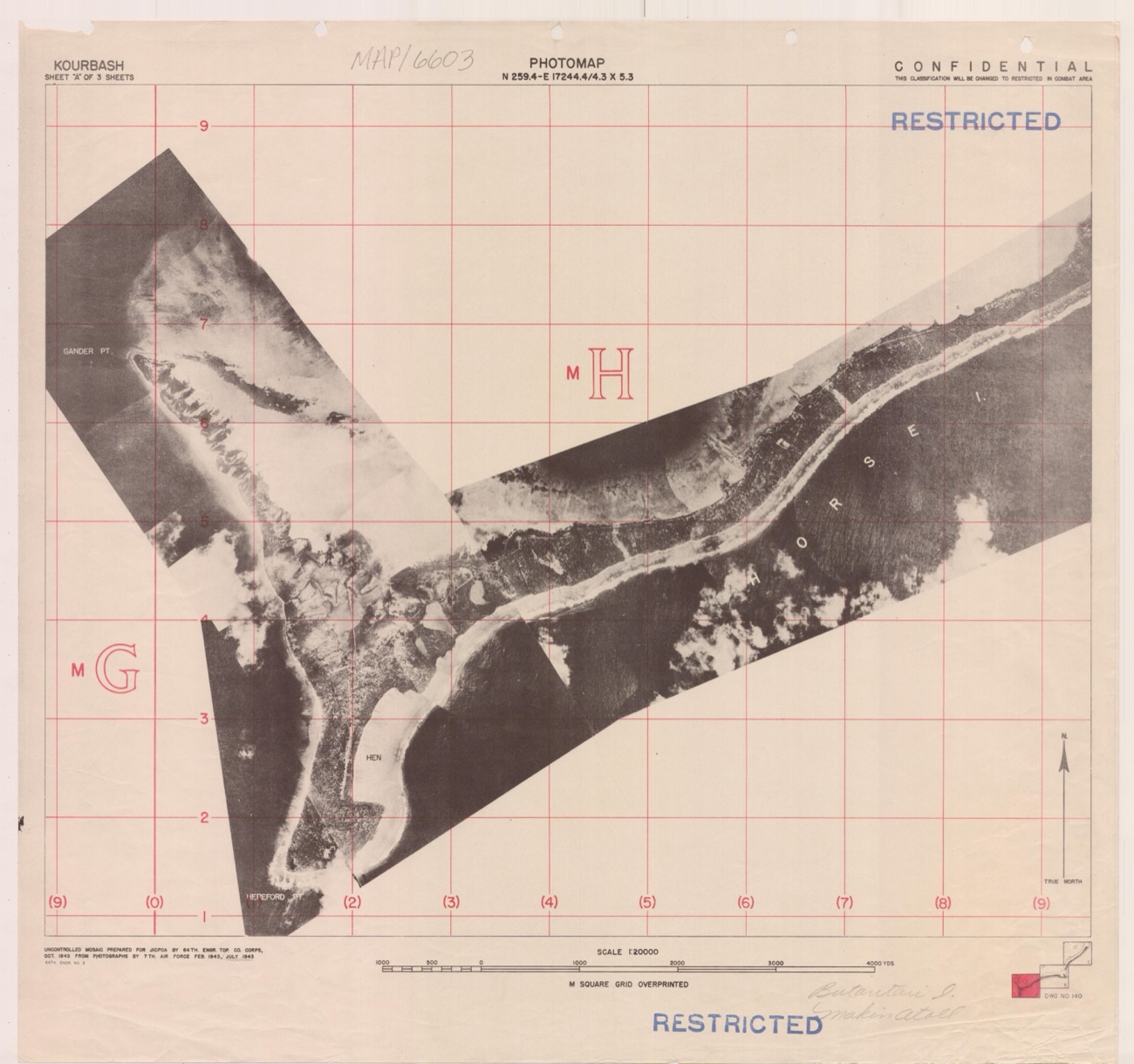
Makin Atoll is a chain of long, narrow islands. The writer and his companions built rafts and dugout canoes and crossed from island to island by night — walking over the coral flats when the tide fell. Eastward, twenty-one kilometers.
That line was not a line for going home. It was only a line for putting distance between themselves and their pursuers.
8 December — two years to the day since the war began. Having circled an island alone looking for his companions and found no one, he was turning back when someone called out. Comrades he had lost track of had finished a raft, and were on the point of setting out. The writer took heart again. For five more days the group wandered from island to island, until, on the squall morning of 13 December, the diary reaches that final line.
⑥ In photographs
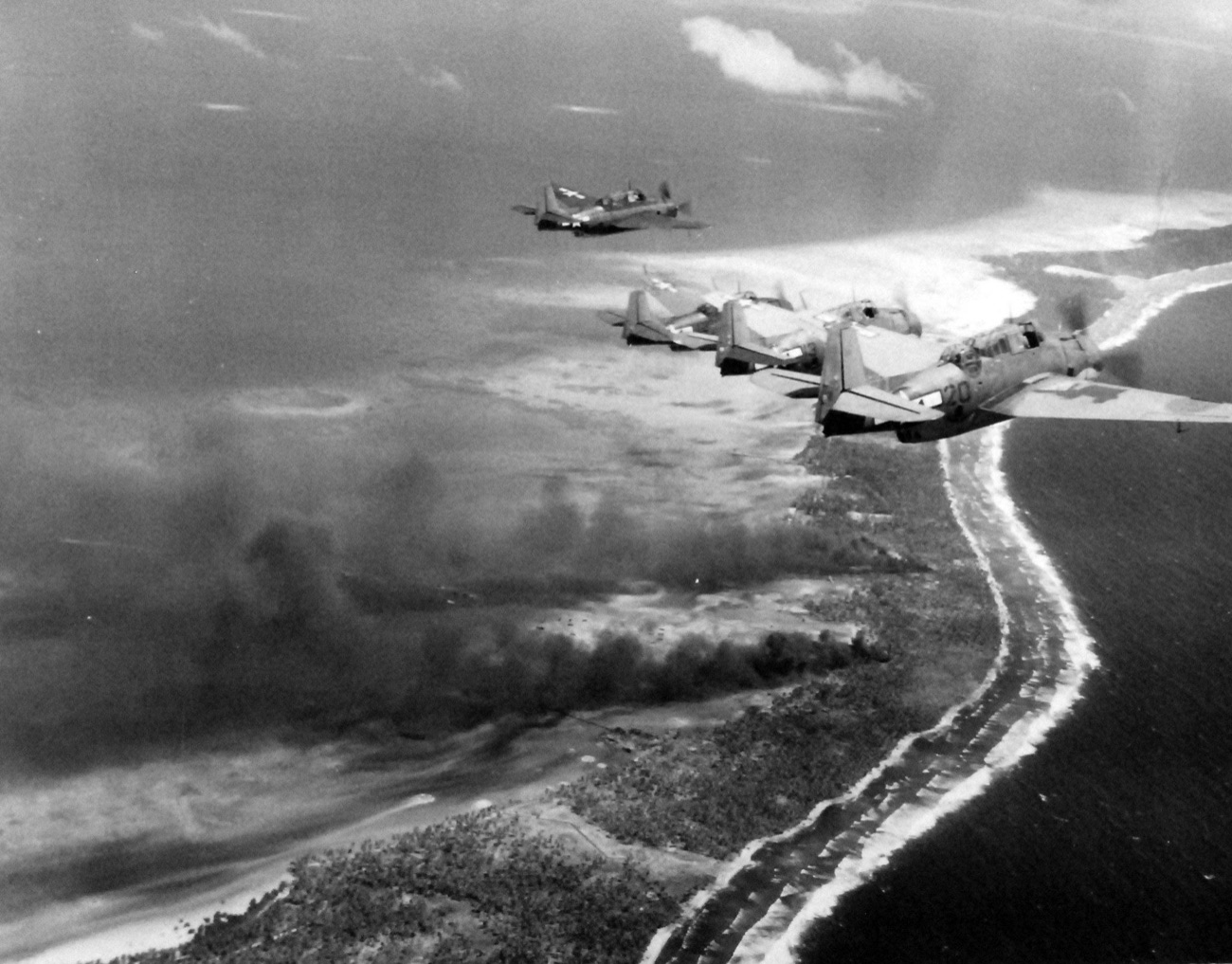
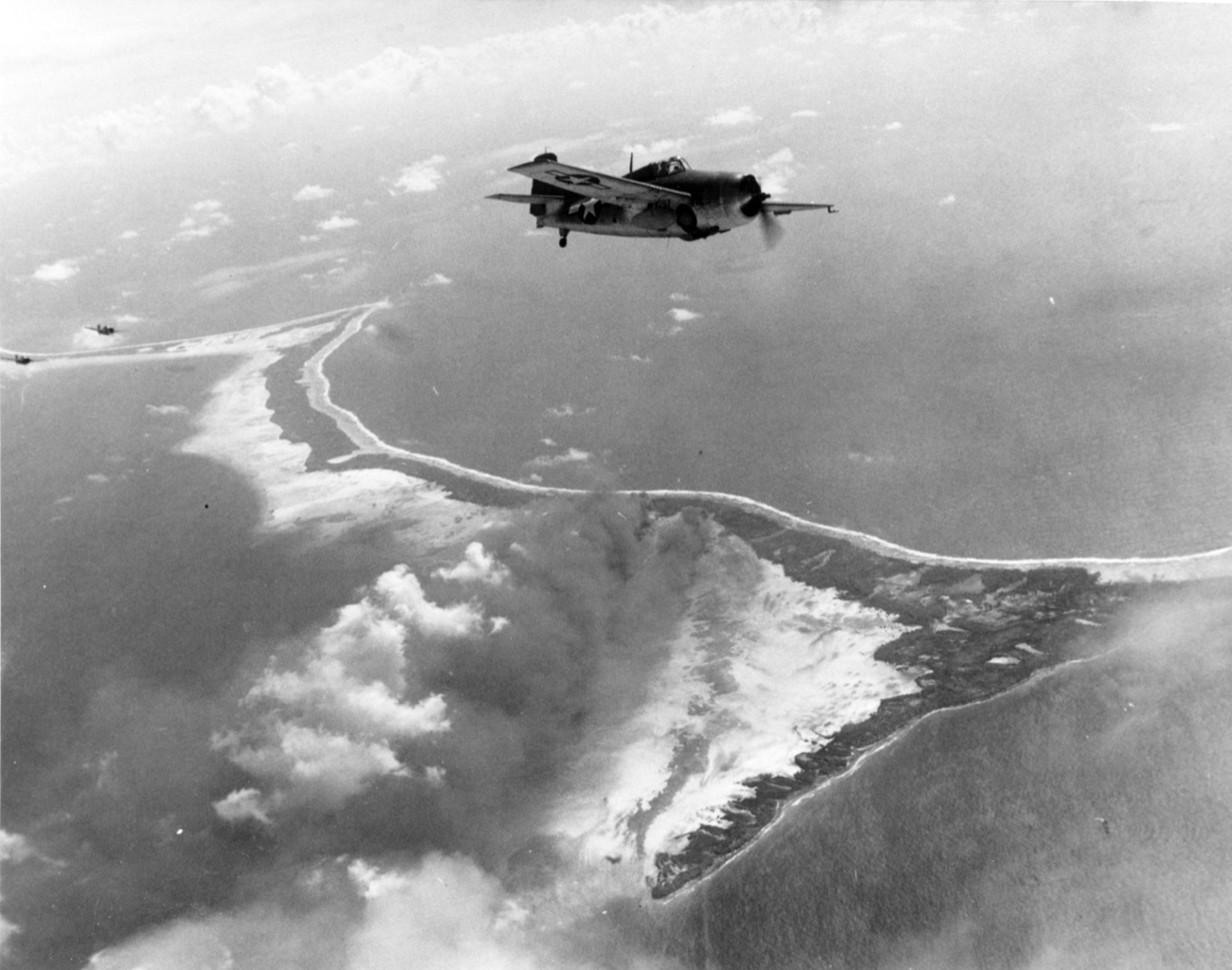
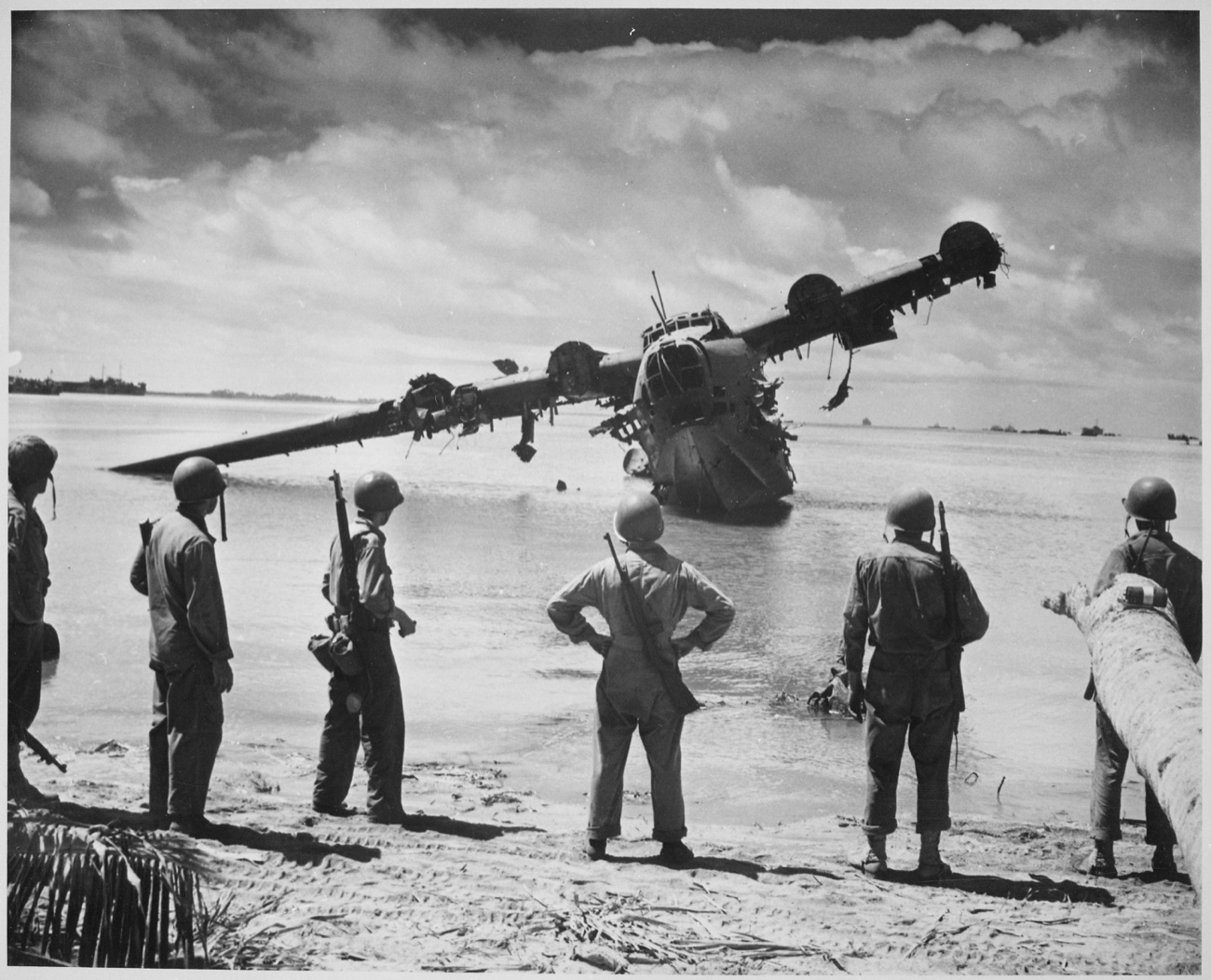
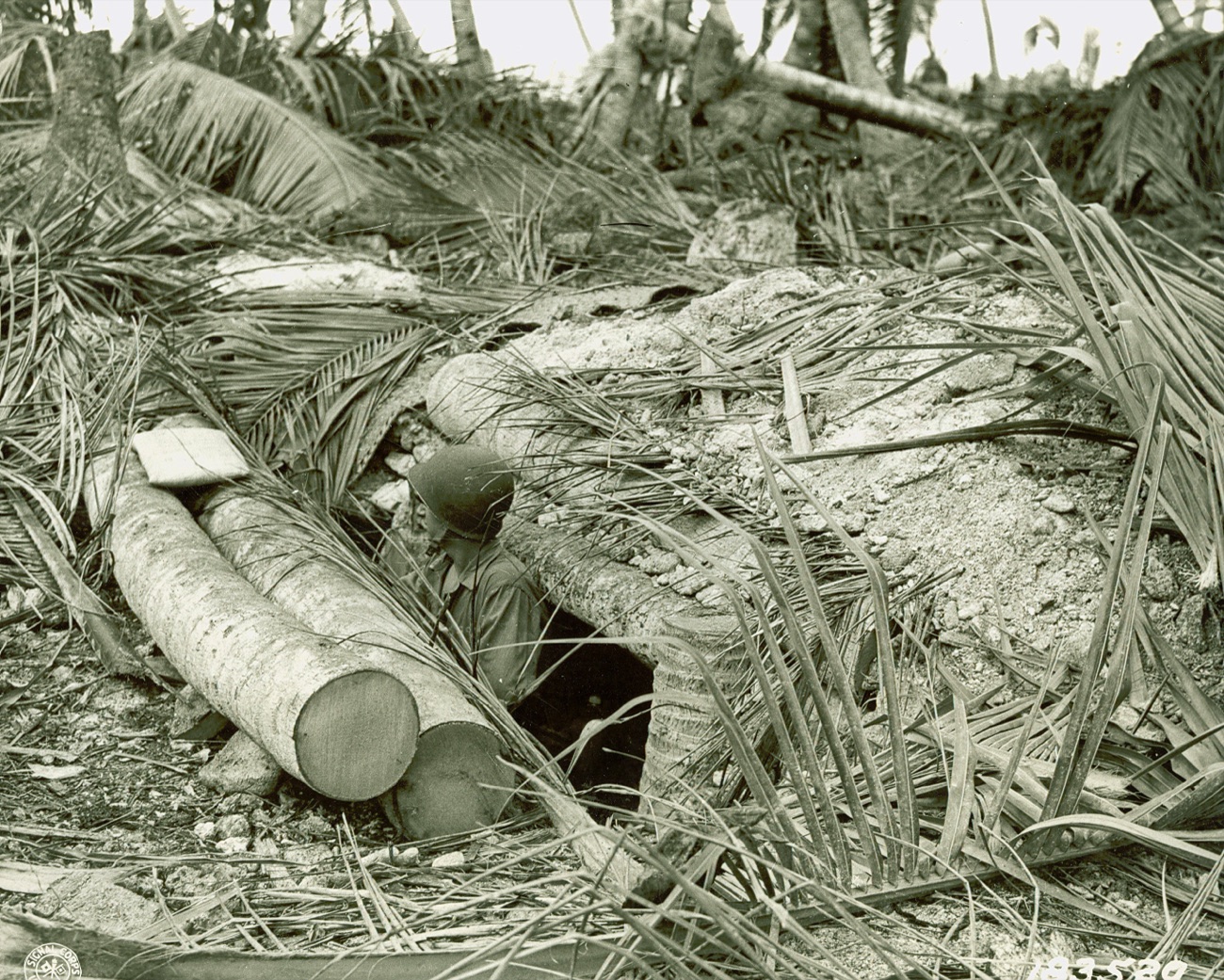
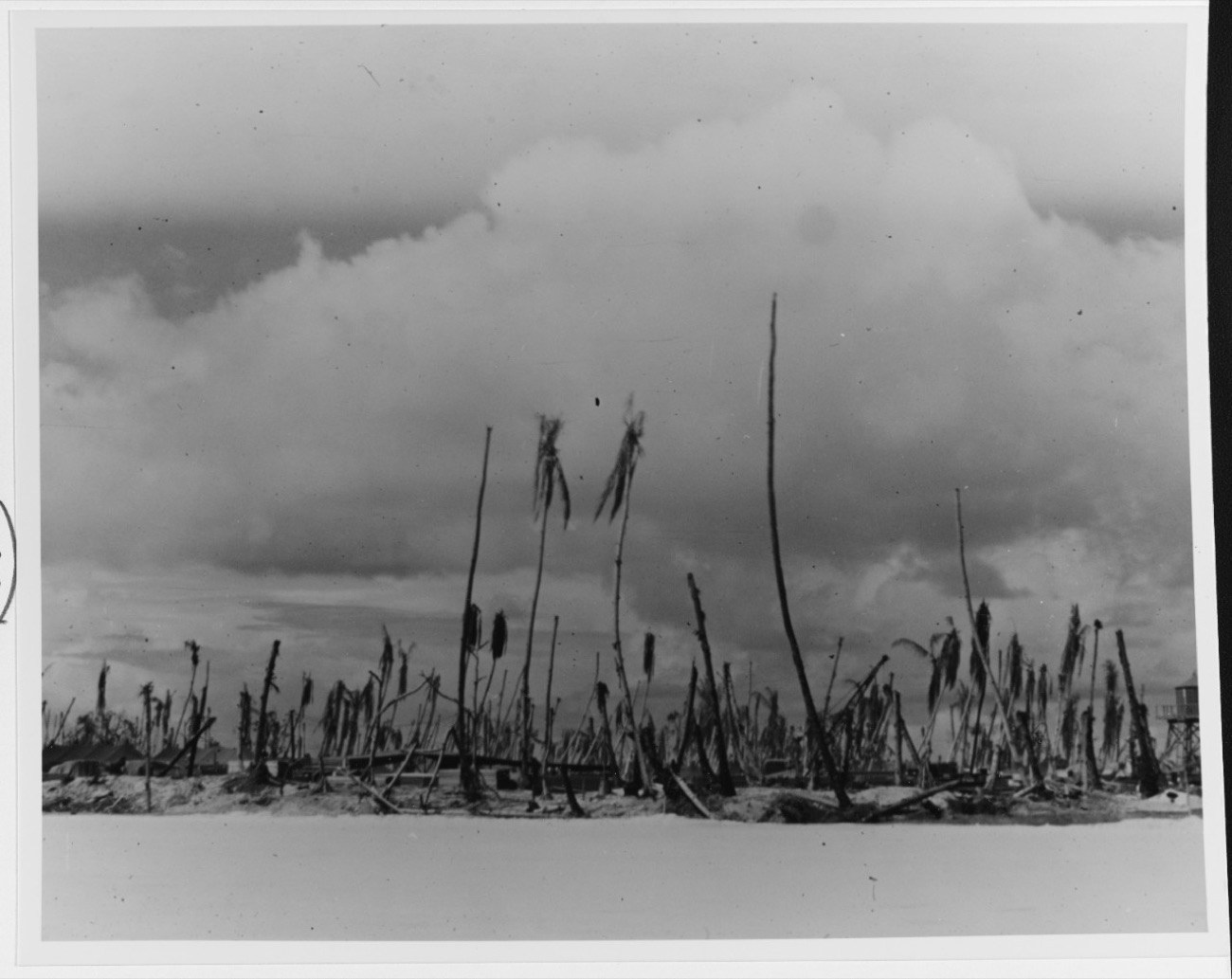
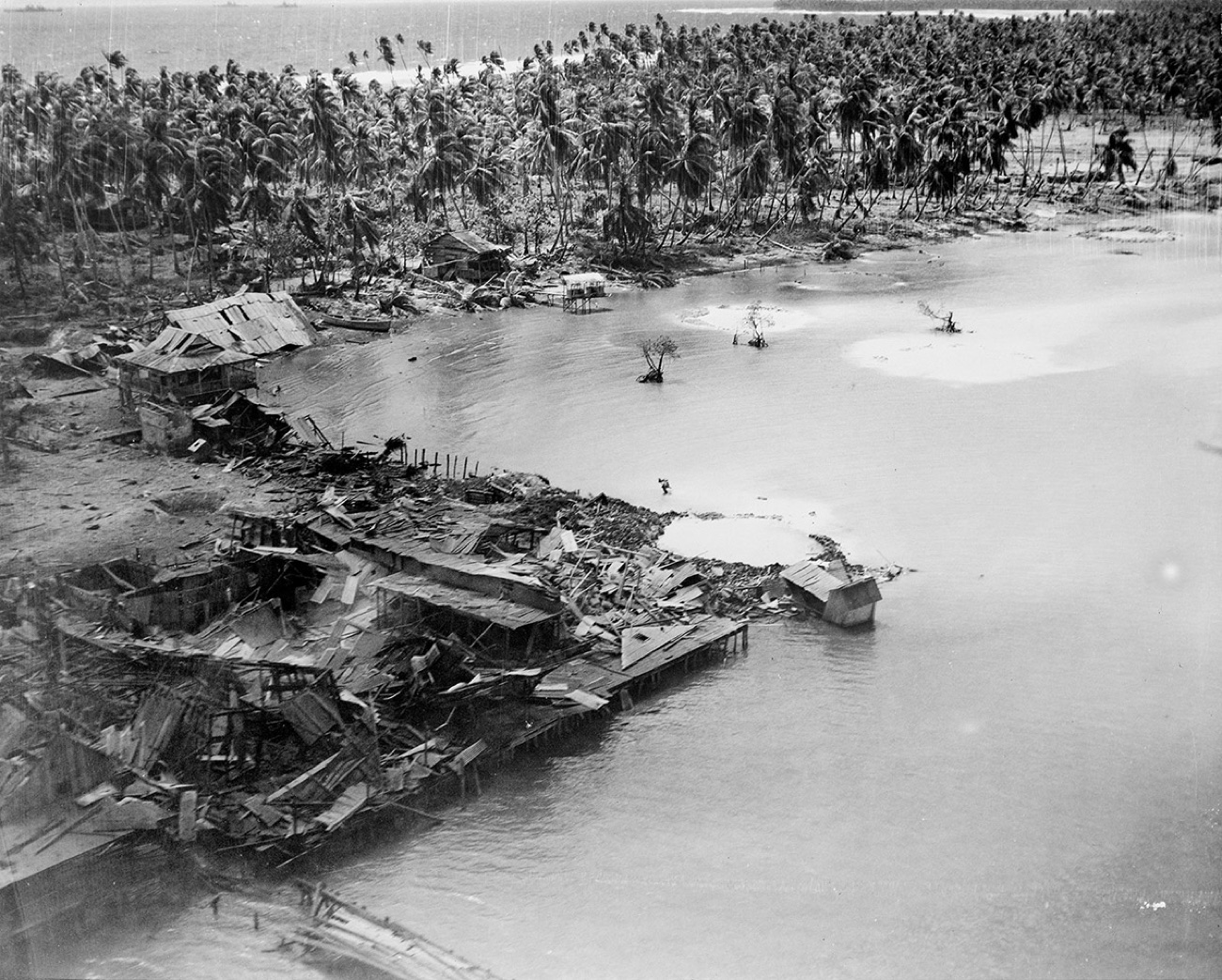
All images are public-domain records. Not one of them shows the nameless writer himself. What remains is the island where he was — and the fact that the ones who photographed it were the enemy.
What rokaku bunsho (鹵獲文書) were — words that survive only in the enemy's translation →
⑦ Going deeper — variant accounts, and what could not be verified
In history, very little can be declared certain beyond doubt. This episode, above all, is a book full of things that cannot be verified. So this page does not pick out "only the certain." Where a thing is uncertain, it says so — and shows it anyway.
Each item below carries a label for how far we could verify it. 🟢 Confirmedsupported by primary or secondary sources 🟡 Disputedsources or scholars disagree ⚪️ Unverifiedplausible, but without evidence
1. What you are reading is the translation — the original is gone 🟢 Confirmed
Let us begin with this episode's most important caveat.
The original notebook of this diary does not survive. What survives is the translation made by U.S. military intelligence — that is, an English version made by the enemy's hand. On this English page, the quotations marked ◆ are taken verbatim from that surviving translation. In that narrow sense, English readers are closer to the surviving document than Japanese readers are: on our Japanese page, the same lines had to be translated back into Japanese, and we cannot claim they reproduce the writer's own wording.
But be clear about what "closer" means. What survives is not the writer's voice; it is a wartime translation of that voice, made under military priorities, by the side he was fighting. Turns of phrase, endings, nuance — all of it passed through the enemy's hands. Three early entries (marked ※) do not survive in the preserved verbatim text we hold, and are our own rendering from the document scans. We add nothing, we stay close to the diary's plain wording, and we do not hide the route the words traveled. That is all any translation of this diary can honestly promise.
Sources: U.S. Army G-2 translation documents (Makin, translated 1944; PD, declassified) — read directly from the preserved scans (recon). Verbatim English lines as preserved in U.S. National Archives records (Prologue Magazine, Summer 2013, "We're still alive today," quoting the G-2 translation). Principles of quotation: production records.
2. "About a hundred men died in the ammunition-dump explosion" — a number we did not use 🟢 Confirmed ⚪️ the number itself: Unverified
In books about the battle of Makin, one number keeps appearing: that about a hundred of the defenders died at once when an ammunition dump exploded. Dramatic, and easy to remember. We did not use it.
The reason: traced back step by step, the story runs to a single line of descent — one Japanese author's work of the 1980s (Satō Kazumasa) — with no primary-source support to be found earlier. Moreover, "about one hundred" fits suspiciously well with a simple subtraction — a garrison figure of about two hundred, minus the hundred-odd taken prisoner. It smells of a number produced by arithmetic, not by witness.
The more plausible a number sounds, the further down its sources we climb. A single account wearing the face of established fact must not be written as established fact. That is a discipline this channel has set for itself.
Sources: the Satō Kazumasa (Gyokusai no Shima) line of descent confirmed; absence of primary corroboration confirmed (tier verification, 2026). ⚪️ = the number itself is unverified. The casualty figure we did use is limited to a separately attested item from the Japanese-side diary record (28 dead in the September air raid).
3. How many were taken prisoner? The sources waver 🟡 Disputed
Even the number of defenders taken alive wavers between 101 and 105 depending on the source — the figures do not settle into one number even within the American official histories. So we do not assert a precise count; we speak at the grain of "about a hundred."
Writing a figure down to the last man looks precise. But fixing a wavering number to a single value is the less accurate act. "About" is not evasion here; it is the honest word.
Sources: variation in POW counts (101–105) within U.S. official histories (The Capture of Makin and others) — grep-confirmed against preserved recon copies. Inconsistency exists within U.S. Army official publications (1940s–50s).
4. "About two hundred Korean laborers" is not in Japan's official war history 🟡 Disputed
The Makin garrison included not only Japanese servicemen but civilian laborers mobilized from Korea (construction crews). The figure "about two hundred" is often given.
To be precise, however: that "about two hundred" does not appear in Japan's official war history, the Senshi Sōsho. What the official history records is the garrison's composition — that one hundred civilian employees of the construction department and one sailor were taken prisoner, the rest dying to the last man — and no more. The figure of "about two hundred Koreans," and the background — that they were conscripted workers mobilized in 1942 from mainland Japan; that they could not surrender because they had been made to distrust the surrender broadcasts — rest on separate scholarship: Shim Jae-wook's 2022 study. The two sources must be shown separately.
Numbers from different sources must not be merged into one. Whose record says what — and what it does not say. Keeping that separation is the least of the procedures owed to these men.
Sources: Senshi Sōsho, vol. 62, pp. 455, 473 (garrison composition — read in the original) / Shim Jae-wook, "The Gilbert Islands Mobilization and Deaths of Korean Civilian Employees of the Japanese Navy in the Pacific War," Journal of Korean National Movement Studies 110 (2022) — bibliography and abstract confirmed by direct retrieval. The two sources are not merged.
5. The island's name was blurred by the translator himself 🟢 Confirmed
Reading the English translation of the diary, there is a curious detail. The name of the neighboring island the writer reached at the end of his flight is, in the translation, deliberately obscured as "[nearby island]." Perhaps the name was withheld as classified; perhaps the translator could not read it.
That island is today's Kuma Island — the northeastern end of Makin Atoll, where the garrison's trace ends. A name the enemy's translator left blank, returned to the map by us, eighty years later — the map for this episode contains one small operation of exactly that kind.
Sources: the "[nearby island]" notation in the G-2 translation documents (read from the preserved scans) / identification of Kuma Island: coordinates matched via Wikidata Q27221025 and place-name collation (2026 recon).
6. Among the enemy's translators was Donald Keene 🟢 Confirmed
Within this enterprise — the enemy translating Japanese soldiers' diaries in quantity — was a young naval language officer who would later become the foremost scholar of Japanese literature: Donald Keene. Years afterward, he wrote:
I hid such diaries, though it was forbidden, intending to return them to the diarists' families, but my desk was searched and the diaries were confiscated. This was a great disappointment.
(Chronicles of My Life, Columbia University Press, 2008, p. 37 — quoted verbatim)
On the enemy's side of the translation desk, there was a human being moved by these words, who wished to return them to their families — and whose wish was blocked by the rules. This nameless diary, too, has passed through hands like those to reach us.
Sources: Keene's memoir Chronicles of My Life, pp. 36–37 (obtained directly and confirmed word for word) / the prohibition: preface to Travelers of a Hundred Ages (1989). There is no evidence Keene translated this particular diary — no connection is claimed.→ the same section for Maruta and Tamura
7. Who the writer was — even his unit is unknown 🟢 Confirmed
We do not know this writer's name. More than that: we cannot even establish which unit he belonged to. A construction crew? The base garrison? In our register, his entry stands as "unit unknown." To make one entry in the roll with no name in it — that was the way of recording left to us for this man.
What we know is only the diary's words. On 18 November, the American air raids begin. On the 24th, the American side reports the island's capture "complete" — and on that same day, at Tarawa, a hundred and seventy kilometers south, another battle was underway.
Sources: G-2 translation documents (no entry establishing his unit) / tier verification. Capture report and simultaneous Tarawa landing: U.S. official histories.
8. And still — daily life is written there 🟢 Confirmed
No name, no original, no unit. And still, this diary too holds a life.
A diary that begins as a dry observation log turns, partway through, into a record of trying to stay alive. Hunger. Naval guns. And — at the end of the surviving days, one quiet line.
We're still alive today.
And among the last things the writer set down:
For the first time we wash our face and hands with soap.
In the middle of a battle, he wrote down that he had washed his face with soap. The name is gone; the touch of that one line is not. It is the proof that this man certainly lived.
Sources: the surviving G-2 translation (verbatim, as preserved in NARA records). The core lines — "We're still alive today" / "For the first time we wash our face and hands with soap" — read against the preserved scans.
Sources
- U.S. Army G-2 translation documents (Makin, translated 1944; PD) — preserved scans read directly; verbatim lines as preserved in NARA records (Prologue Magazine, Summer 2013)
- Senshi Sōsho vol. 62, pp. 455, 473 (garrison composition) / Shim Jae-wook 2022 (Korean civilian employees)
- U.S. official histories (The Capture of Makin and others; POW counts) / the Satō Kazumasa line (the explosion story — as grounds for non-use)
- Donald Keene, Chronicles of My Life (2008), pp. 36–37 / Travelers of a Hundred Ages (1989), preface
On this channel, the selection of sources, the verification of facts, and the interpretation and final judgment of the words are all done by humans. AI is used for parts of production (voice synthesis, image styling, translation assistance). See our editorial principles.
⑧ Watch the film / To the next fragment
We are going out to look for the next fragment. Subscribing to the channel, and liking this film, is what gives us the strength to do it.
The notebook whose name came home (Tamura Yoshikazu) → The notebook not yet home (Maruta Toshimichi) → Trace it on the map →
The facts in this article rest on primary sources — the diary via the U.S. military's English translation (NARA), checked against the scan of its first page; garrison and POW figures via Senshi Sōsho vol. 62, pp. 455/473 and U.S. official histories; the Korean laborers via Shim Jae-wook (2022) and others; the Keene episode via his memoir, pp. 36–37. All diary quotations and photographs are in the public domain.
Article text © 2026 紙片の日本史 / Fragments of Japan ・ Corrections: contact@fragmentsjapan.com