Written to the very last page
——The two notebooks Satō Tomigorō kept writing on Wotje Island
In the middle of the Pacific, on Wotje Atoll in the Marshall Islands, one Japanese sailor kept writing in his notebooks. His name was Satō Tomigorō. He had been a bus driver in Tokyo.
There were two notebooks. A hundred and sixty-eight pages between them. And on those pages, written on an island that was going hungry, what comes first is not a record of hunger but a record of daily living.
This page is a place to retrace, with verifiable facts, what the film could not tell of what is in them.
① Two notebooks — the size of a palm
Begin with the physical. The notebook holding the will is 12 cm by 7 cm, 112 pages. The diary notebook is 15 cm by 10.5 cm, 56 pages. Across those 168 pages, in small characters in faint pencil, the text runs densely in a mix of kanji and katakana🟢 (the measurements as recorded in the Nihira paper, p. 272).
Twelve centimetres is a thing that sits in the palm of a hand. Into a notebook that fits in a breast pocket went two years of life on an island, and words for a family.
The diary entries that survive run from 1 August 1944 to 25 April 1945🟢 (the Nihira paper, p. 271). And already at the opening, it says: "from 30 January this year …… reduced rations." Which means that the days before the hunger are not written in this diary. From the first page to the last, it is a diary written inside hunger.
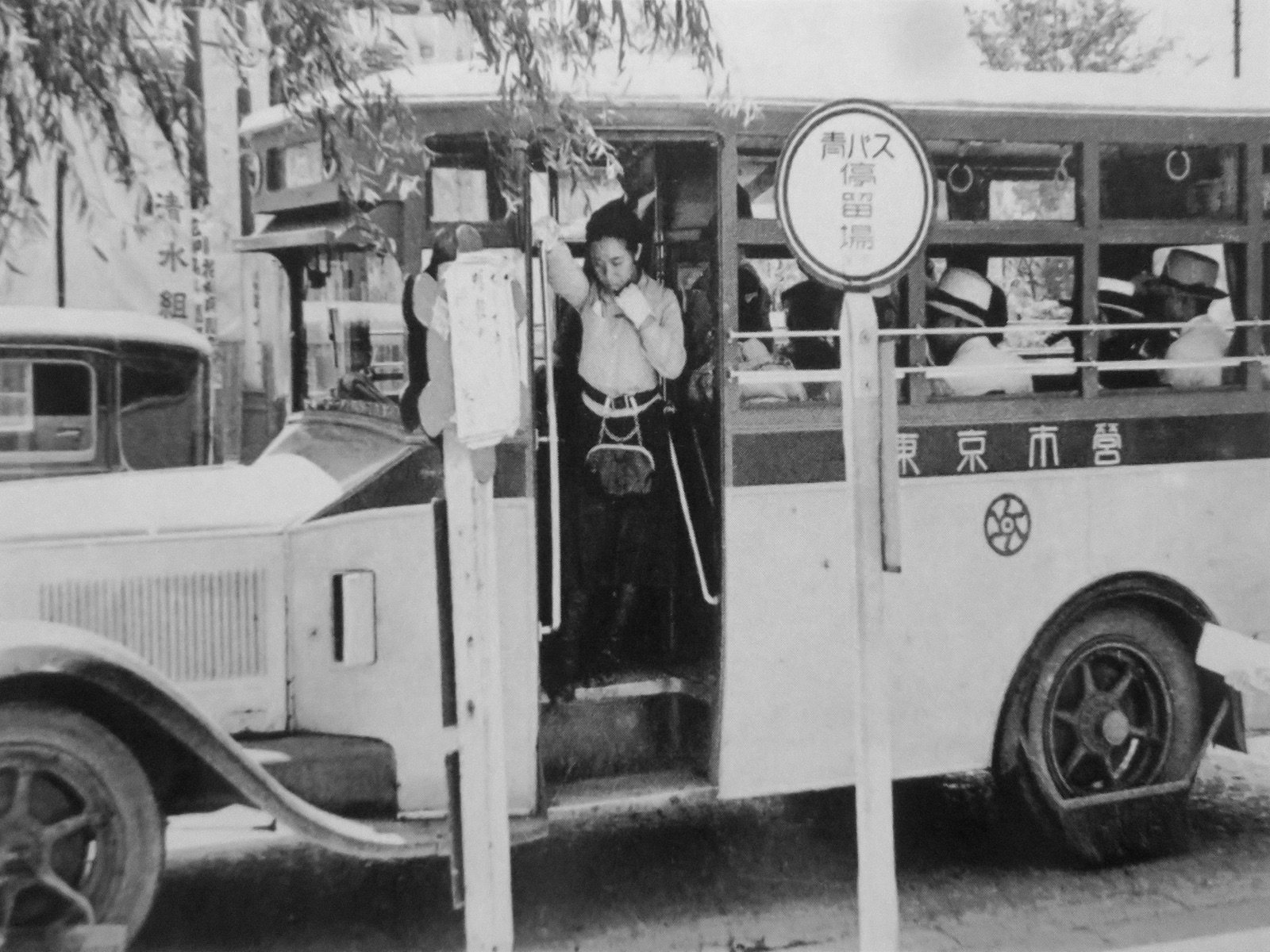
② He had been a bus driver
Satō Tomigorō drove a city bus in Tokyo. He had a wife, Shizue, and four children — 孝子, 信子, 勉, and the youngest, a baby🟢 (the children's names as given verbatim in the will = the Nihira paper, p. 275).
He was called up on 28 April 1943 and went to the naval barracks at Yokosuka. In July he left Yokosuka, changed from ship to ship, and entered Wotje Atoll on 1 August🟢 (his own diary: "A year ago today, we entered Wotje"). He was called up as a 水兵長 (leading seaman); the highest rank in the records is 一等兵曹 (petty officer first class) — a posthumous promotion for death in action has also been suggested. His life on the island runs, from here, for one year and nine months.
③ The island that was passed over
In February 1944 the American forces came to the Marshall Islands. What they took was the neighbouring Kwajalein Atoll. They did not land on Wotje. They did not attack it; they went past it — what military history calls "island hopping," the leapfrog strategy🟢.
In place of a landing, the ships stopped coming. At that point there was a garrison of some three thousand men on the island🟢 (as recorded in Nimitz, Taiheiyō Kaisenshi, the Japanese edition of Nimitz's history of the Pacific war = 3,324 men as of January 1944), and the supply line to every one of them was cut. The diary says:
Three months already, since we were cut off.
No rice, no medicine, no letters from home. Without a battle, the island quietly went hungry. Only about one in three left the island alive — many are said to have died of hunger (the figures differ greatly between sources → ⑩-1).
What island hopping was — not attacked, but bypassed →
④ Ordinary days, inside the hunger
What is startling when you open this diary is that what fills it is the contrivances of daily living. A few, in date order (all 1944; verbatim as published in the Nihira paper)🟢.
- 7 August — "Made cigarettes from papaya leaves and smoked them."
- 9 August — "Received makuwa melon seeds from Kurosawa Jōsui, and applied night soil and the like." He sows the seeds he was given, and manures them. The same day, his eyes having gone bad: "Put in Wakasa Heisō's Rohto eye drops, and it got much better."
- 15 August — "On the fifteenth day, a ration of about two (biscuits). One coconut was issued." Once in fifteen days, about two biscuits.
- 16 September — "A drum-can bath, for the first time in a while. It feels good."
- 1 October — the farm plot reopened. "Broke ground on two hundred tsubo and planted kaoliang."
- 3 October — twenty-four pumpkin seeds, "sowed at once, that morning."
- 10 October — celebrating a comrade's return: "Filled our bellies with copra; for a day like today, nothing could be more of a feast."
- 11 October — "Had two spoons made for me by Jōsui. Done. My thanks." Two spoons, made for him, and the thanks for them left in the diary.
- 19 October — at midday he caught sea cucumbers on the shore: "Supper, pumpkin rice. Nothing better."
- 22–27 October — a trip island to island, to gather coconuts.
He sows seeds. He takes a bath. He gives thanks for a spoon. Inside the hunger, this man does not let go of ordinary life.

Two spoons made for him, and then: 「了。感謝」— done, my thanks. …I feel as if all of who he was is in those few characters.
⑤ The family section — only here, in large characters
Within the notebook, pages addressed to his family appear. "From here on this is the family section, so please read it carefully." — pages meant to be read by the family. Only here is the writing large🟢 (as explained on the Mizuki Shorin special page).
Letters with nowhere to go: Tomigorō begins to write them inside the notebook (the verbatim lines are those published in the Nihira paper and on the Mizuki Shorin special page)🟢.
Love the children for my share as well, and raise the four of them.
孝子, 信子, 勉, and the baby too. As for filial duty — all of you together, be good to your mother.
He calls the four children by name, one by one. He writes out his advice on property, too: do not sell the fields at 亘理, where the family comes from. "As for how you live after I am gone…… choose whatever way is best to live by." A record of the correspondence with his family remains as well — "Letters went back and forth only from August to about November of [Shōwa] 18…… just once, around December, a parcel arrived. Thank you."
And he wrote down one thing, just one, that he wanted to eat.
If only I could have a tendon from Kadoya. Even sour pickles would do.
That same hand writes this to the children.
On the anniversary of my death, give the children plenty of good things to eat.
In happy times and in hard times, trust one another, share what is joyful,
and live well and brightly, eating good things.
On an island where the food was running out, the words this man left his family were tied, to the end, to eating.
⑥ The last thing he wrote, and a comrade's hands
25 April 1945. The last page of the notebook🟢 (the Nihira paper, pp. 309–310).
The 25th. Cannot move at all. In pain.
Cannot write the diary. This is my will.
Shōwa 20, April, the 25th
The last, perhaps.
The next day, the 26th, Satō Tomigorō died of malnutrition. He was thirty-nine. The fighting never came to this island🟢 (the Mizuki Shorin special page).
The two notebooks did not end on the island. They were carried to the family in Sendai by the hands of a comrade who survived, Harada (原田豊秋)🟢 (the details of how they arrived are not known → ⑩-4).
The eldest son, 勉, kept the notebooks for a long time. "I tried several times to read it through, but the tears came and I couldn't go on"🟢 (an interview in J-CAST BOOK Watch). In 2005 the psychologist Nihira (仁平義明) deciphered the notebooks, and later a team of younger researchers, the 「金曜調査会」 (the "Friday Study Group"), spent more than a year on a transcription, using infrared examination as well. In 2018 it became a book (→ ⑦). The son contributed to that book himself.
A diary entry saying that the diary cannot be written. …Right to the very last page, it is properly written.
⑦ Where to go from here — a book and a film
The quotations on this page come from what is publicly available (the research paper, the publisher's special page, and the like). The notebooks, the family, and the people who went to the island are told at depth in the following book and films.
- Māsharu, Chichi no Senjō (ed. 大川史織, Mizuki Shorin, 2018, ISBN 978-4-909710-04-8) — the transcription of the two notebooks, with essays by researchers and by the family.
- The film Tarinai (dir. 大川史織, 2018) — a documentary following the son, 勉, as he visits his father's island, Wotje, in 2016. A sequel, keememej (2021), takes its title from the Marshallese for "remembering."
- 仁平義明, "The will and battlefield diary of Petty Officer First Class Satō Tomigorō," 白鴎大学論集 25-1 (a university bulletin, 2010) — the research paper that first reported the reading of the notebooks. It is published in the institutional repository.
⑧ In photographs
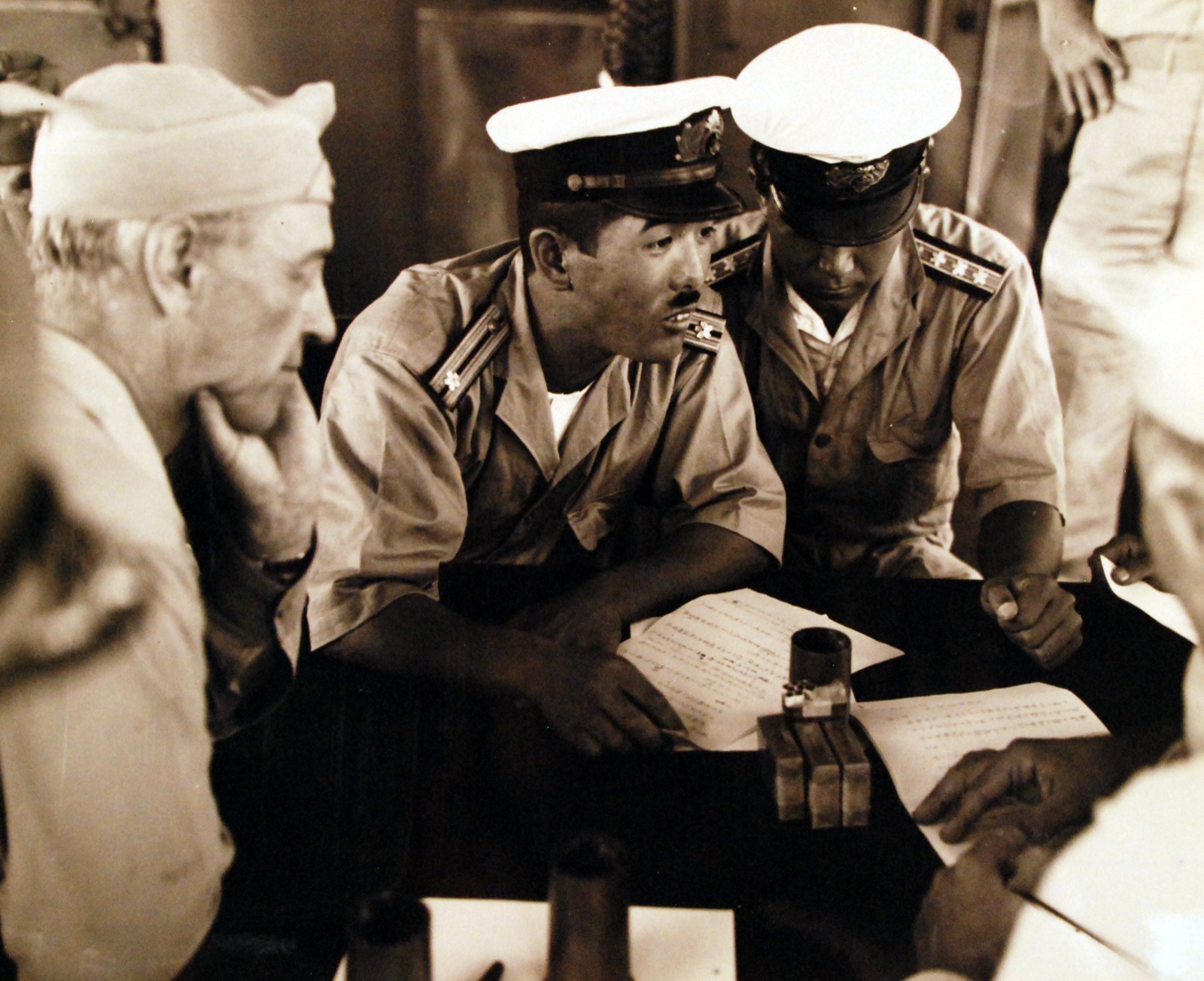
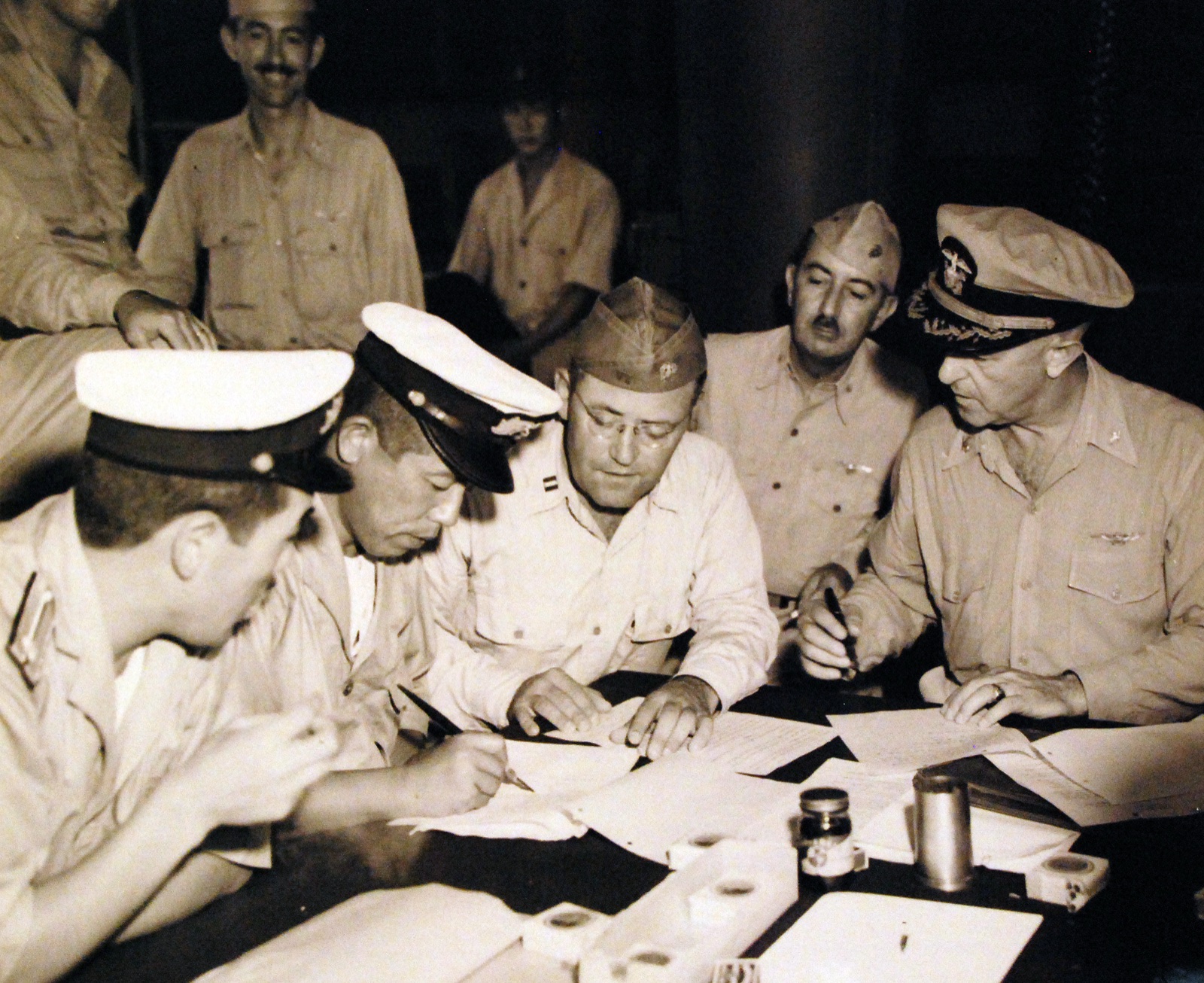
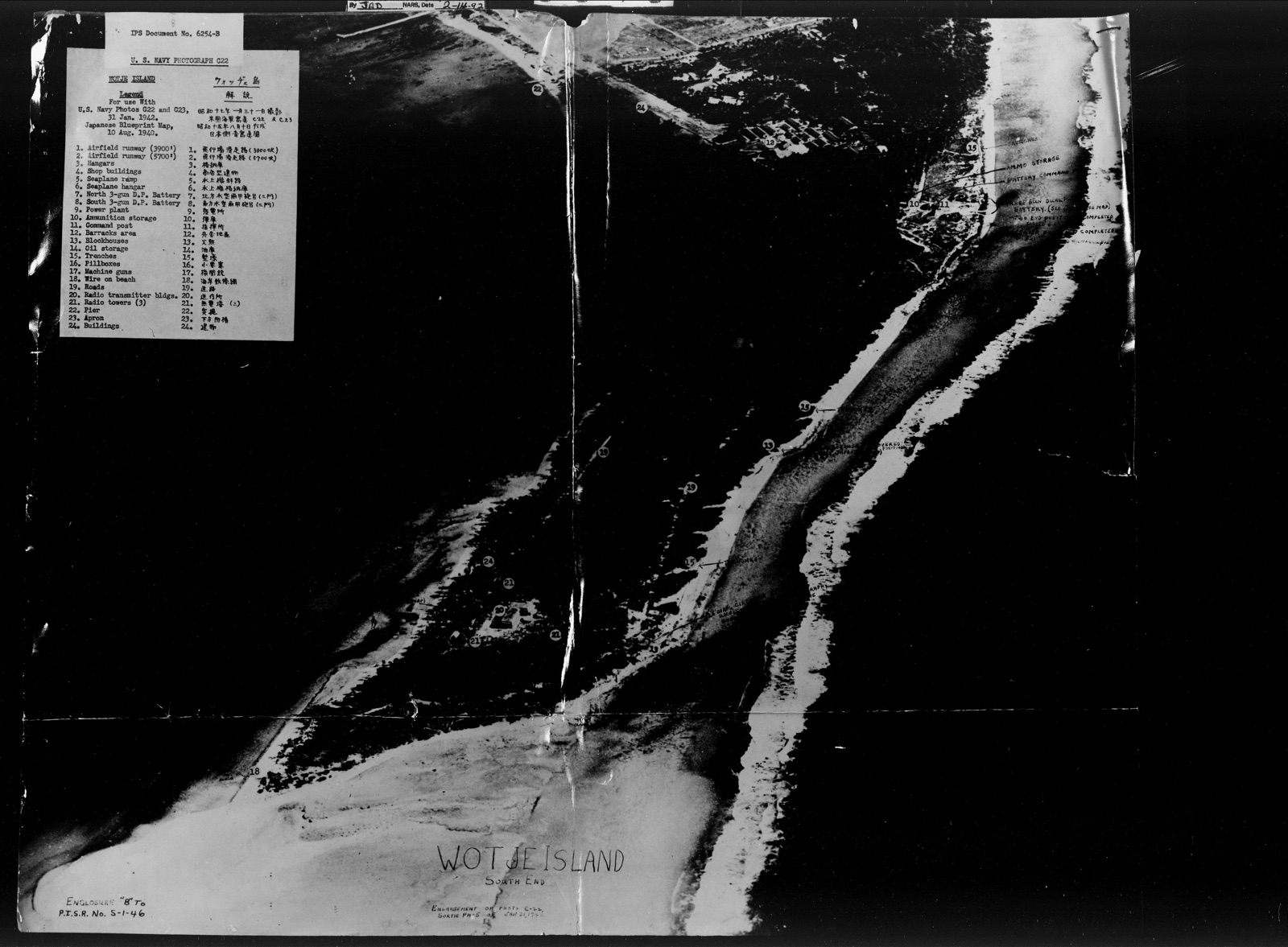
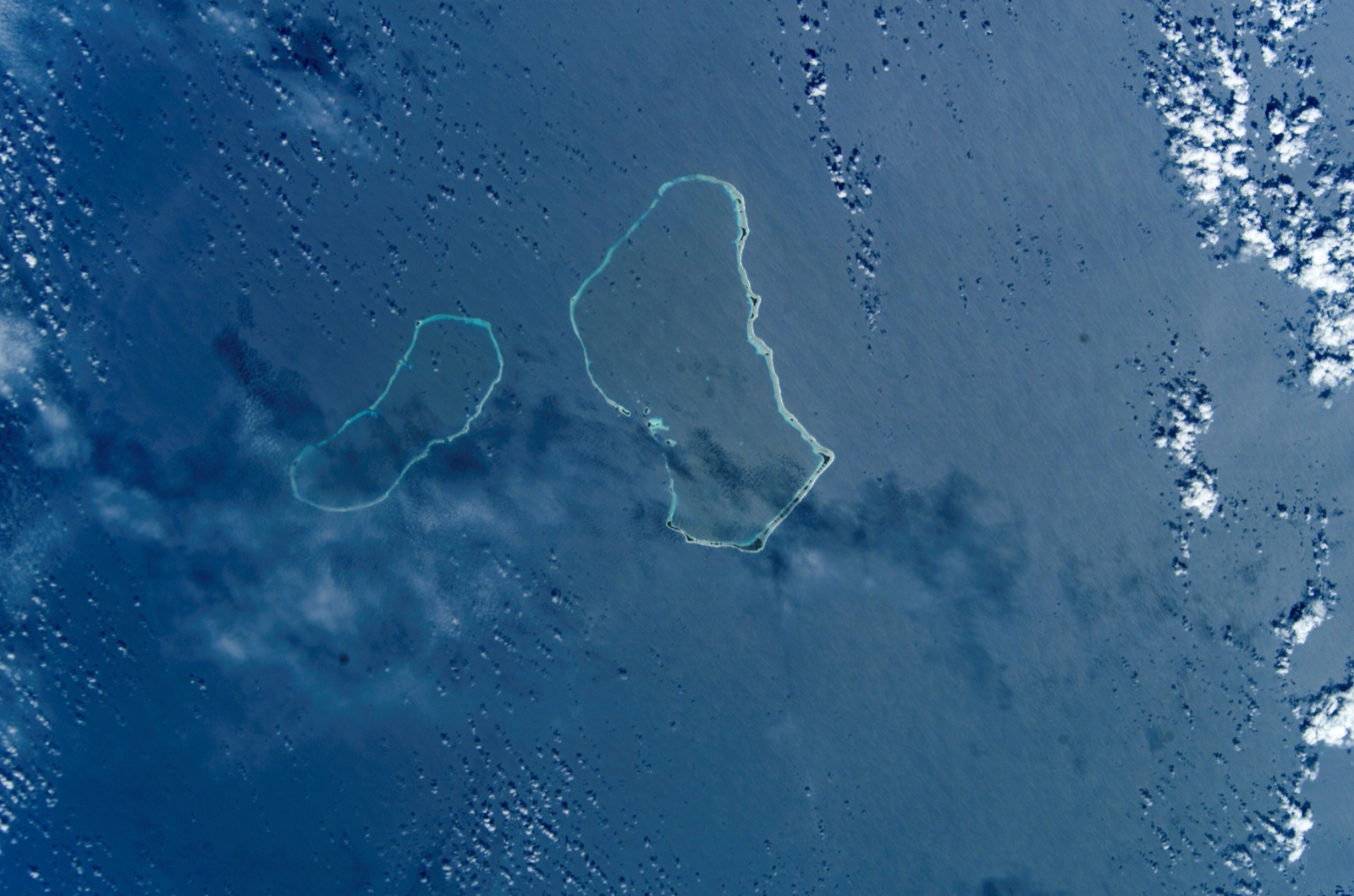
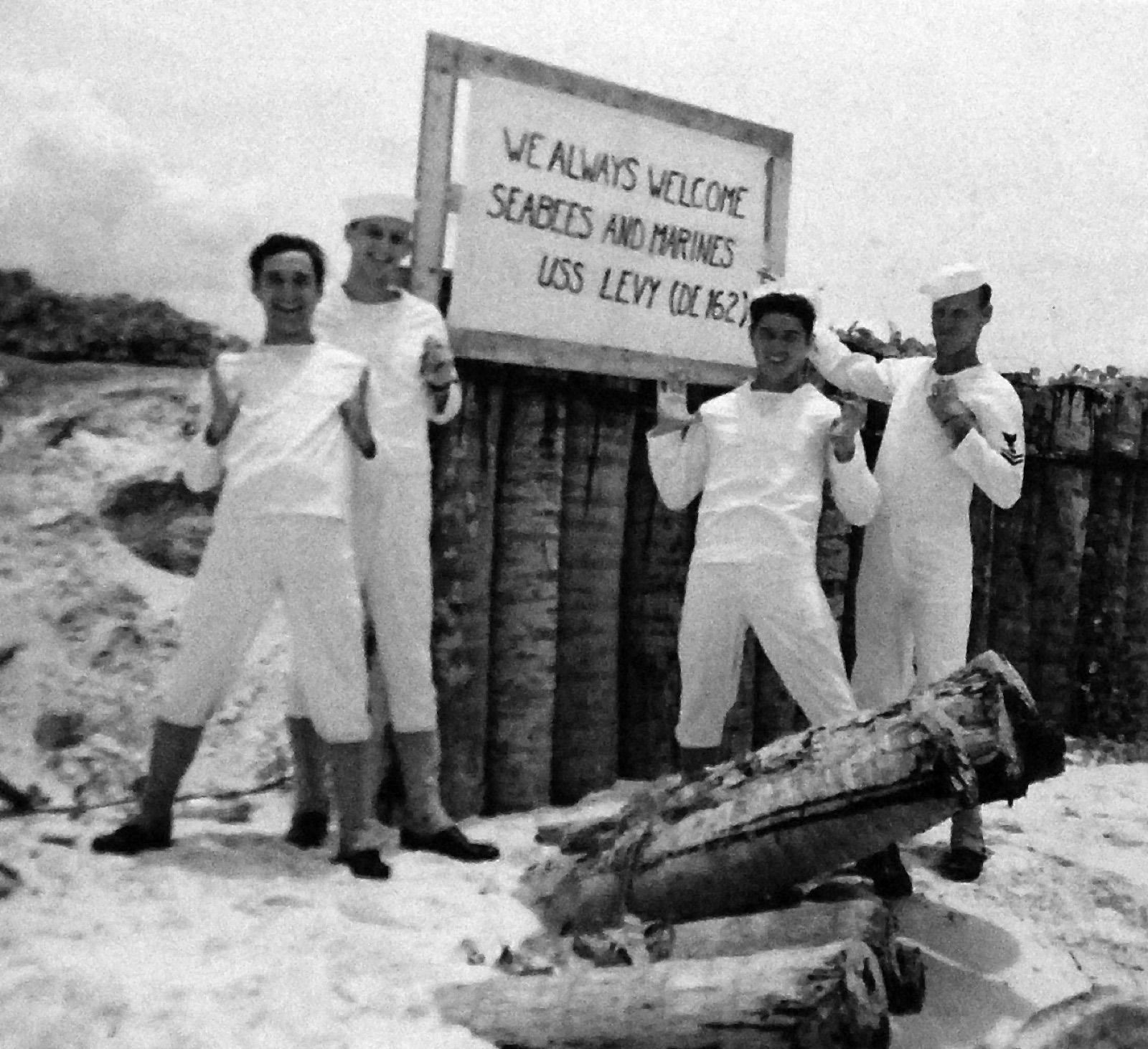
The photographs are publicly available materials from the U.S. Navy (public domain), the National Diet Library Digital Collections, NASA, and 石川光陽 (public domain).
⑩ In more detail — differing accounts
The key: 🟢 = confirmed in more than one source / 🟡 = differs between sources, or is disputed / ⚪️ = no backing obtained. Where we do not know, we write that we do not know.
🟢 Confirmedconfirmed in more than one source 🟡 Disputeddiffers between sources, or is disputed ⚪️ Unverifiedno backing obtained
1. The figures for the garrison and for the dead differ greatly between sources 🟡 Disputed
The garrison of about 3,324 men as of January 1944 is as recorded in Nimitz, Taiheiyō Kaisenshi🟢. The number who came through, on the other hand, moves with the line of sources — a commercial publication's account gives 3,100 holding out and 1,074 surviving (土屋太郎, Wotje-tō Rōjō Roppyakunichi); a chronology gives 1,414 repatriated (ed. 日置英剛); and a figure of 2,900 dead of starvation also appears (with no source stated, we cannot confirm it⚪️). That is why this page and the film say only "about one in three" and "the figures differ between sources."
2. His unit was the navy's 64th Naval Guard Unit 🟢 Confirmed
大川史織, the editor of Māsharu, Chichi no Senjō, states plainly in a newsletter of the Japan Center for Asian Historical Records (JACAR): "Tomigorō's unit was the navy's 64th Naval Guard Unit." That unit was formed in April 1942 and, belonging to the 6th Base Force, was responsible for the defense of Wotje Island. The unit's wartime log (JACAR Ref. C08030497100) and 「生存者給与通牒控綴」, a bound file of notifications concerning allowances for survivors (JACAR Ref. A03032167800), are published as well.
Tracing it from the unit's side: the 64th Naval Guard Unit (the unit index, naval guard shelf) / the 6th Base Force (the same index, base-force shelf)
3. The date of arrival differs between sources 🟡 Disputed
The short biography in the Nihira paper (the paragraph based on the son's testimony) says he "landed on 28 April." But a note on the diary in the same paper says that "it is clear that the entry into Wotje was on 1 August 1943" — the paper disagrees with itself. What settled it was Tomigorō's own diary: on 1 August 1944 he writes, "A year ago today, we entered Wotje." The 28th of April was the day of the call-up, which he himself called "the anniversary of my call-up."
And thirteen days before his death, in the entry for 13 April 1945, there is this: "At least until the anniversary of my call-up, 28 April." He had made the day he became a soldier his last goal.
3. Where the original notebooks are now is not stated in any publicly available source ⚪️ Unverified
That the eldest son, 勉, kept them for a long time is certain🟢. We have not been able to find a publicly available source stating where they are now (with the family, or deposited somewhere).
4. How the notebooks reached Sendai is not known in detail ⚪️ Unverified
That the one who carried them was his comrade Harada (原田豊秋) is certain🟢. When, and by what course, they were handed to the family cannot be confirmed from publicly available sources. And in the diary entry for 19 October 1944 there is this one line — "Harada and I were the same age." Whether the "Harada" who appears in the diary is the same person as the Harada who carried the notebooks home is not known⚪️. If they are the same, then a comrade written about in the diary carried the diary to the house; but this page does not assert it until it can be confirmed.
5. Two forms of his name, 冨五郎 and 富五郎, stand side by side 🟡 Disputed
Most books and articles write 冨五郎; the bibliographic records of the research paper (CiNii, 白鴎大学論集) write 富五郎. Both are in public use. This site follows the form used in the books, 冨五郎.
6. On the four lines that end the notebook 🟢 Confirmed
"The 25th. Cannot move at all. In pain. / Cannot write the diary. This is my will. / Shōwa 20, April, the 25th / The last, perhaps." (the Nihira paper, pp. 309–310). On the day he could no longer write the diary, the report that he was giving up writing the diary became that day's diary — and after these four lines the pages are blank. His death the following day is confirmed in postwar records🟢.
7. "The rice gruel with a mouse in it" may be irony 🟡 Disputed
From 1 October 1944: "Today's rice gruel again (a mouse got in) — the best taste in Japan." The Nihira paper that deciphered it notes itself that "the best in Japan" may be irony. Sincere impression, or irony — from the letters on the page alone it cannot be decided. That some things cannot be decided is part of how this diary is read.
Sources
Japan Center for Asian Historical Records (JACAR) Newsletter No. 27, "Reading the diary of Satō Tomigorō — across seventy years" (大川史織) / 仁平義明, "The will and battlefield diary of Petty Officer First Class Satō Tomigorō," 白鴎大学論集 25-1 (2010; PDF published in the institutional repository = the verbatim lines in ①③④⑤⑥) / the Mizuki Shorin special page and product page for Māsharu, Chichi no Senjō / J-CAST BOOK Watch (2018) / Shōsetsu-maru, 70seeds, KUMON now! (interviews with 大川史織) / Nimitz, Taiheiyō Kaisenshi (the garrison figure) / the Japanese Wikipedia article on Wotje Atoll and others / photographs = U.S. Navy (public domain, NHHC/NARA), National Diet Library Digital Collections, NASA, 石川光陽 (public domain).
This channel does all source selection, fact verification, and interpretation and final judgment of language by human hands. Parts of production (voice synthesis, image stylization, translation assistance) use AI. See our production principles.
Watch the film / to the next piece
We go looking for the next piece of paper. Subscribing, and a thumbs-up on this film, are what make that possible.
Watch & subscribe on YouTube → It survived because it was thrown away (Heijō-kyō, #009) → Follow it on the map → The index of units and their paper →
The facts in this article rest on publicly available research papers, the publisher's special page and the like (the main sources are also in the video description). The photographs shown are public domain or openly licensed materials (see each credit).
Article text © 2026 紙片の日本史 / Fragments of Japan ・ Corrections of factual error: contact@fragmentsjapan.com